

Key Takeaways
Why Cat Introductions Require a Structured Approach
Unlike dogs, cats are solitary hunters by nature. They establish and defend territories, and an unfamiliar cat arriving without warning registers as an immediate threat - not a potential companion. The resident cat's first instinct is to defend its space; the newcomer's is to hide or appease. Both animals experience genuine physiological stress, which can lead to long-term behavioral problems including house soiling, aggression, and chronic anxiety if introductions are mishandled.
The structured multi-stage method described below works because it separates olfactory (scent) exposure from visual exposure, and visual exposure from physical contact. Each stage allows the cats to process and habituate to one another's presence at a pace their nervous systems can manage. Skipping stages because "they seem fine" is the most common mistake owners make - early calm can be misleading.
Before you begin, make sure your new cat has had a veterinary health check. Introducing a cat carrying an undetected illness or parasite puts your resident cat at risk. See the room-by-room preparation checklist for everything you should set up before your new cat even arrives home.
What you will need
The Step-by-Step Introduction Process
Work through the steps below in order. Do not advance to the next stage until both cats consistently display calm, relaxed body language - loose posture, normal eating, and no prolonged hiding or vocalization - at the current stage.
Set Up the New Cat's Base Room
Before the new cat enters your home, designate one room - ideally one your resident cat does not use frequently - as the newcomer's exclusive space. Equip it with everything the new cat needs: food, water, a litter box placed away from the food, a hiding spot, and a comfortable resting area. Keep the door closed at all times during this initial phase.
The resident cat will immediately detect the new scent under the door. Allow them to sniff and investigate the door at their own pace without any interference from you.
Begin Scent Swapping
After two to three days, start deliberate scent exchanges. Rub a clean sock or cloth gently along one cat's cheeks and chin - where their scent glands are concentrated - then place that cloth in the other cat's space. Do this in both directions, daily.
Watch how each cat responds. Sniffing and walking away is neutral. Hissing at the cloth means slow down; the cat is not ready to advance. Rubbing against or ignoring the cloth calmly signals readiness to proceed.
Introduce Scent at Feeding Time
Once both cats tolerate the exchanged scents calmly, begin feeding them on opposite sides of the closed door. Place each cat's bowl close enough to the door that they can smell the other while eating, but far enough that neither feels threatened.
Over several sessions, gradually move the bowls closer to the door - but only if both cats continue eating without distress. Associating the other cat's scent with something positive (food) is the core mechanism at work here.
Allow Visual Contact Through a Barrier
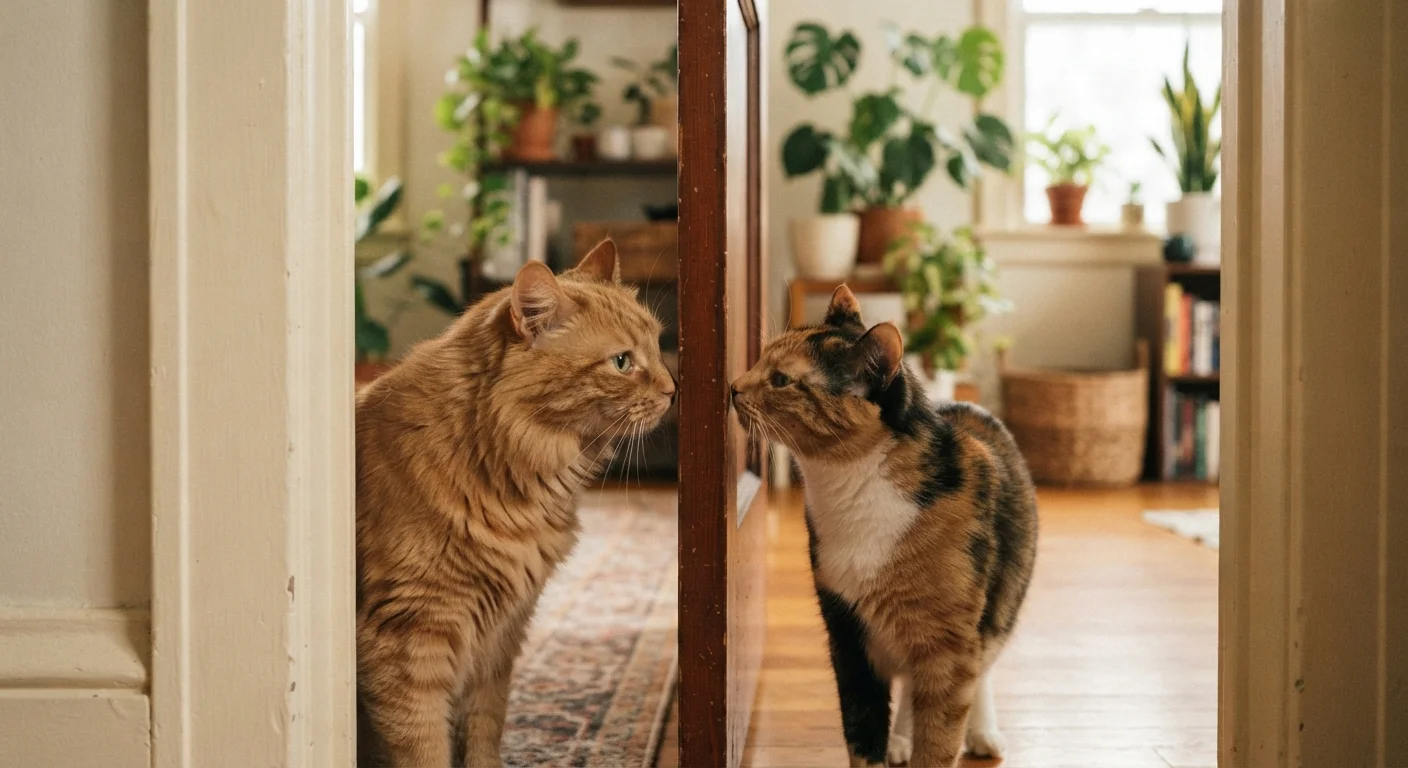
When both cats eat calmly right at the door, introduce a visual barrier: crack the door slightly using a door stopper, use a mesh baby gate, or install a screen door temporarily. The cats can now see each other but cannot make physical contact.
Keep initial visual sessions short - five to ten minutes - and supervise them entirely. Offer treats or interactive play on each side of the barrier to keep the experience positive. Gradually extend session length as both cats remain relaxed.
Facilitate Supervised Face-to-Face Meetings
Only after sustained calm visual contact - typically several days to a week of barrier sessions - allow the cats into the same space together. Choose a neutral room neither cat considers their primary territory. Keep sessions short and stay present throughout.
Do not intervene in brief, non-escalating hissing or swatting; this is normal negotiation. Do intervene - by calmly separating the cats with a blanket or pillow, never your bare hands - if chasing, biting, or prolonged aggressive posturing occurs. End the session and go back to barrier contact for a few more days.
Gradually Expand Shared Territory
As face-to-face sessions go well, slowly give both cats access to more of the home - one room at a time. Ensure there are always enough resources for both: multiple feeding stations, water sources, litter boxes, resting spots, and vertical space. Scarcity of resources is a primary driver of inter-cat conflict long after introductions are complete.
Continue monitoring body language daily. Most cats reach a workable coexistence - not necessarily affectionate friendship, but peaceful cohabitation - within one to four weeks of the full introduction process.
Patience Is the Most Important Tool
The instinct to rush introductions - especially when both cats seem curious rather than aggressive - is the most common reason introductions fail. Even cats that appear tolerant early on can regress if pushed too fast. A slower timeline costs you a few extra weeks; a failed introduction can mean years of household conflict. Commit to the pace the cats set, not the pace you prefer.
Reading the Room: Body Language and Troubleshooting
Throughout the introduction, monitor both cats for stress signals. Green-light signals - signs it is safe to advance - include slow blinking, relaxed ears, grooming after interactions, and eating normally near the shared boundary. Red-light signals - reasons to slow down or go back a stage - include hissing or growling that persists beyond a few seconds, flat ears, puffed tails, prolonged crouching, or refusal to eat.
Some hissing and swatting during early visual introductions is normal and does not mean the cats will never coexist. It means they need more time at that stage. If aggression escalates to chasing, biting, or one cat completely monopolizing spaces and resources, consult a veterinarian or a certified cat behavior consultant - some introductions genuinely require professional support.
Environmental enrichment plays a major supporting role throughout this period. Vertical space (cat trees, shelves), multiple hiding spots, and separate feeding stations reduce competition and give each cat a sense of control over their environment. Our guide to environmental enrichment for indoor cats covers practical setups worth implementing before introductions begin.
If you are also navigating a multi-species household, the same slow-exposure principles apply to dogs. The guide to preparing your dog for another pet walks through that parallel process in detail.
This article is for general informational purposes only. For behavioral concerns beyond what this guide addresses, consult a licensed veterinarian or a certified animal behavior specialist.