

Key Takeaways
Why Natural Pest Control Makes Sense
Synthetic pesticides can solve pest problems in the short term, but they often disrupt the very ecosystem that keeps gardens balanced. Beneficial insects get eliminated alongside harmful ones, soil biology suffers, and some pests develop resistance over time. Natural pest control approaches work with your garden's ecology rather than against it - and many of them cost very little to implement.
This doesn't mean accepting crop losses or watching plants suffer. The methods below are grounded in established horticultural and entomological principles. Some involve changing what you plant and where; others use physical barriers or naturally derived sprays. Used together, they form a layered defense that's genuinely effective - especially when paired with healthy soil practices. See our guide to home composting for building the kind of soil that supports resilient plants from the ground up.
Attract and support beneficial insects
Many insects are your allies in the garden. Ladybugs, lacewings, parasitic wasps, and ground beetles prey on or parasitize common pests like aphids, caterpillar eggs, whiteflies, and mites. The key is giving them reasons to stay.
Plant small-flowered nectar sources - dill, fennel, yarrow, sweet alyssum, and cilantro allowed to bolt - near vulnerable crops. These provide food for adult beneficials, which then lay eggs near pest colonies. Avoid broad-spectrum sprays even when they're labeled as organic, since many kill indiscriminately. Reducing or eliminating pesticide use is often the single biggest step toward a self-regulating garden ecosystem.
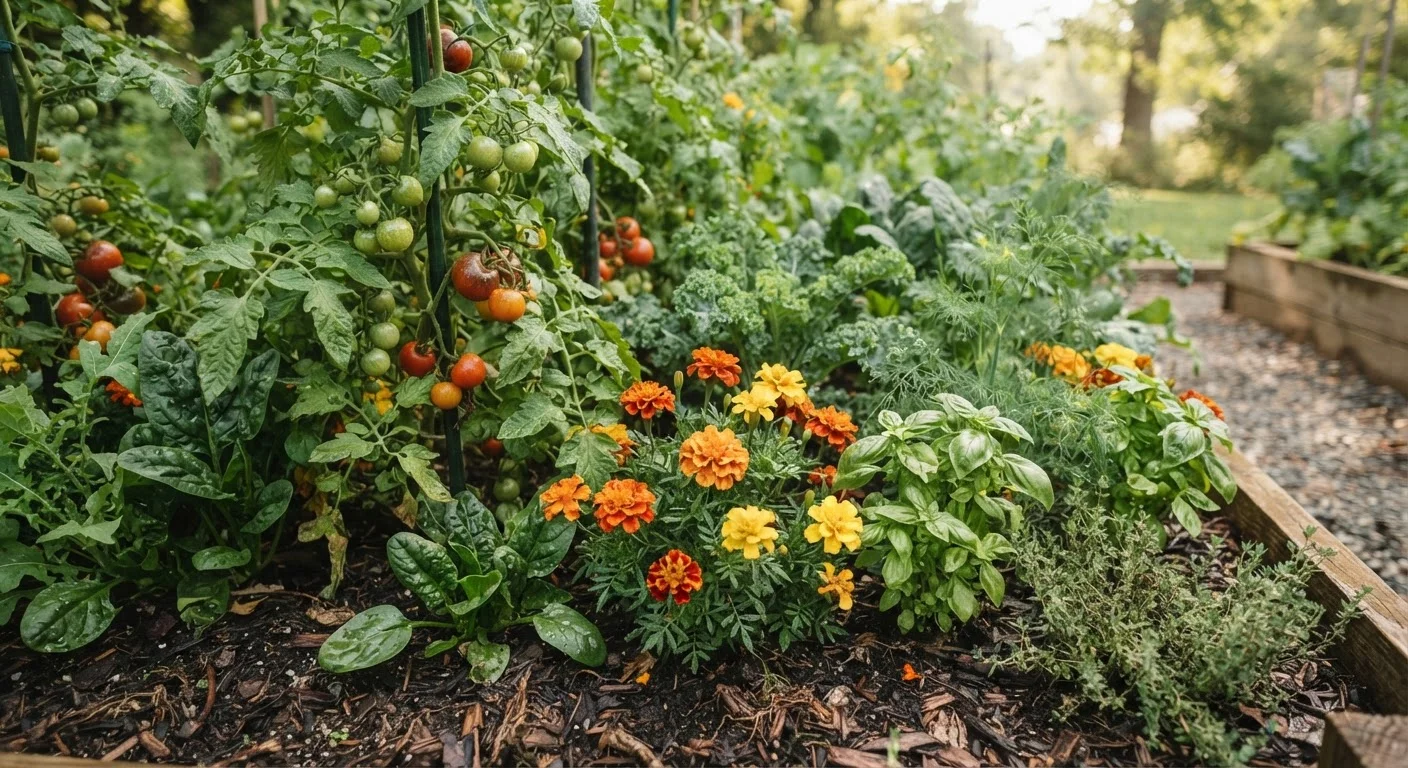
Planting nectar-rich herbs near crops gives beneficial insects the food they need to stay and hunt pests.
Use physical barriers before pests arrive
Row covers made from lightweight fabric (often called floating row cover or garden fleece) are one of the most reliable ways to exclude insects physically. Draped over young transplants and secured at the edges, they prevent cabbage moths, cucumber beetles, squash vine borers, and many other pests from reaching plants at all - without affecting air circulation or light transmission meaningfully.
Copper tape around raised bed edges can deter slugs and snails, which react to copper with a mild deterrent response. Collars made from cardboard or plastic cut from drink bottles, pushed an inch into the soil around seedling stems, block cutworms effectively. These tools require upfront setup but often prevent the most damaging early-season infestations.
Row covers installed before pest season starts can prevent infestations entirely - no sprays needed.
Apply neem oil and insecticidal soaps strategically
When pest populations spike and manual removal isn't keeping up, neem oil and insecticidal soaps are two of the most widely researched lower-toxicity options available. Neem oil, derived from the seeds of the neem tree, disrupts the feeding and reproductive cycles of many soft-bodied insects and has some fungicidal properties as well. Insecticidal soaps work by breaking down the outer coating of soft-bodied pests like aphids, spider mites, and mealybugs on contact.
Both are most effective when applied in the early morning or evening to avoid harming pollinators and to reduce evaporation. They break down relatively quickly in the environment compared to many synthetic alternatives. Follow label directions carefully - even naturally derived products can harm plants or beneficial insects when misapplied or overused.
Neem oil and insecticidal soaps are most effective applied in the morning or evening, targeting pests directly.
Practice crop rotation to disrupt pest cycles
Many soil-dwelling pests and pathogens are host-specific - they thrive when the same plant family grows in the same spot year after year. Rotating plant families (for example, moving nightshades, brassicas, and cucurbits to different beds each season) interrupts life cycles that depend on overwintering in soil near a familiar food source.
A simple three- or four-zone rotation system, where each plant family moves to a new location annually, can meaningfully reduce populations of pests like the Colorado potato beetle, root-knot nematodes, and clubroot fungus over several seasons. Keep a basic garden map or journal to track what grew where - it doesn't need to be elaborate to be effective.
Rotating plant families annually starves soil-dwelling pests that rely on the same crops returning each season.
Monitor plants regularly and remove pests by hand
Consistent observation is arguably the most underrated pest control tool available. Catching an aphid colony on three leaves is a five-minute fix; catching it after it's spread to an entire plant - and been colonized by ants farming the honeydew - is a much harder problem. A weekly walk-through, checking undersides of leaves, stem junctions, and the soil surface, keeps you ahead of most infestations.
Handpicking works well for larger pests: hornworm caterpillars, squash bugs, Colorado potato beetle larvae, and similar insects can be dropped into a bucket of soapy water. For dense aphid clusters, a firm spray of plain water from a hose often knocks enough off to tip the balance in the plant's favor. This kind of direct, targeted intervention avoids any collateral impact on the broader garden ecosystem.
A weekly monitoring walk lets you catch pest problems when they're still small and manageable.
Build soil health to grow more resilient plants
Healthy plants grown in well-structured, biologically active soil are genuinely more resistant to pest damage - not just in theory, but in observed garden practice. Plants under nutrient stress, particularly those with excess nitrogen, produce tender, fast-growing tissue that attracts aphids and other sap-sucking insects. Plants in compacted, poorly drained soil are more vulnerable to root pests and fungal issues that weaken their defenses.
Adding mature compost, avoiding soil compaction, and ensuring appropriate drainage all support the kind of plant vigor that makes pest damage less catastrophic even when it occurs. For a deeper look at what supports and undermines soil health, our article on common garden soil myths is worth reviewing before your next planting season.
Plants grown in healthy, well-balanced soil are naturally more resistant to pest colonization and damage.
Putting It All Together
No single method eliminates all pest pressure on its own. The most resilient gardens combine several approaches - attracting beneficials, using physical barriers early in the season, rotating crops annually, and monitoring plants weekly so problems are caught before they escalate. Companion planting strategies layer especially well with these methods, adding pest deterrence and pollinator attraction at the same time.
For gardeners invested in building long-term garden health, native plants deserve a close look - they've co-evolved with regional insects and often require far less intervention overall. Start with one or two methods that fit your current garden setup, track results over a season, and expand from there. Small, consistent changes compound into a noticeably healthier garden over time.
Start a simple garden monitoring log
Keep a small notebook or phone note dedicated to your garden observations. Record what pests you see, where, and in what numbers each week. Over one or two seasons, patterns emerge that tell you exactly when and where to intervene - saving time and preventing losses before they start.