

Key Takeaways
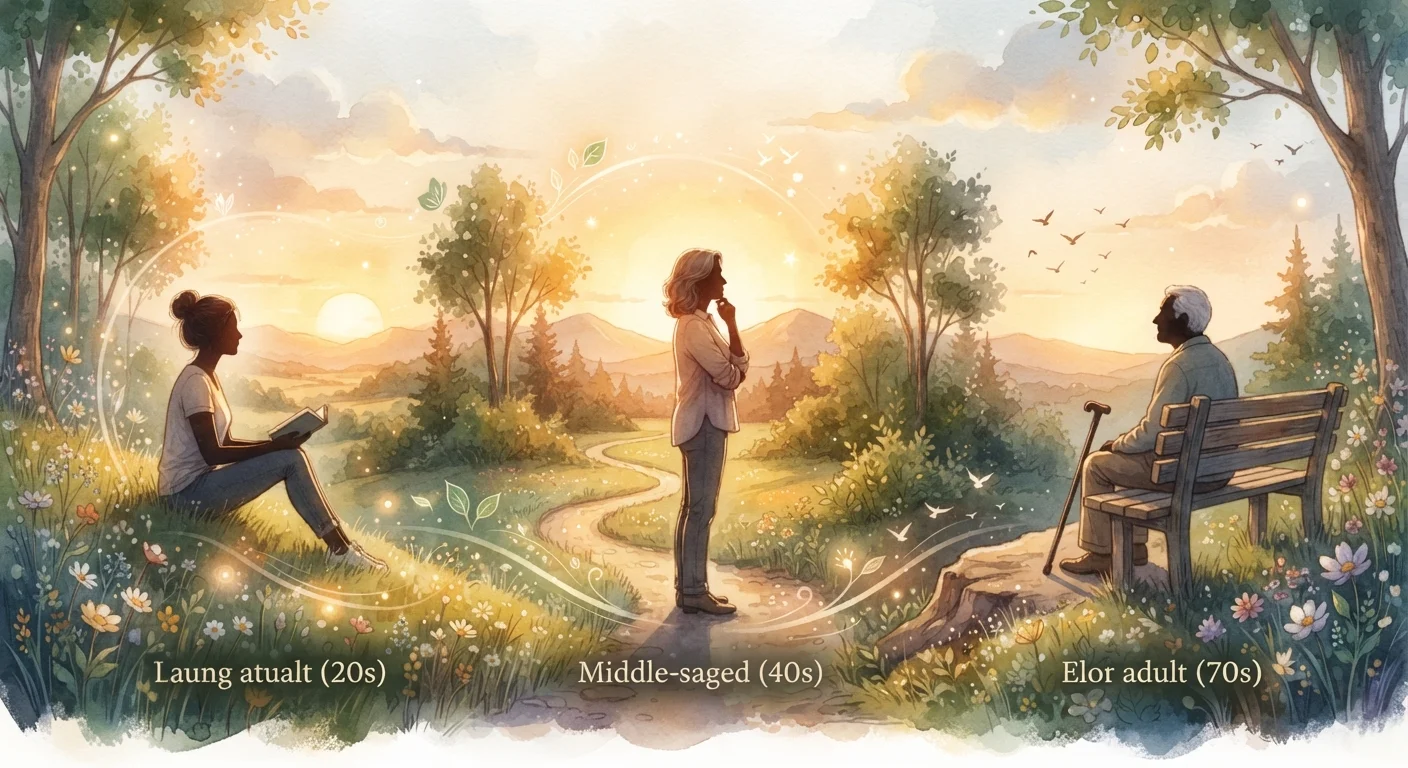
Why Emotional Needs Change Over Time
Mental wellbeing isn't a static destination - it's a moving target shaped by the roles we hold, the transitions we navigate, and the losses and gains that accumulate over decades. If you've ever noticed that the things that stressed you at 25 feel entirely different at 45, you're not imagining it.
Psychologists have long recognized that emotional development continues well into later life. Each decade brings new demands on identity, relationships, and coping capacity. Understanding what mental wellbeing actually means is a useful starting point - because it's far more than the absence of a diagnosis. It encompasses how we handle daily stress, sustain relationships, and find purpose.
This guide walks through the distinct emotional landscape of each major life stage, and the practical strategies that tend to help most.
1 in 5
U.S. adults experience a mental illness each year
According to the National Institute of Mental Health, mental health challenges are common across all age groups.
75%
of mental health conditions emerge before age 24
The World Health Organization notes that early adulthood is a critical window for mental health patterns to establish themselves.
40%
of older adults report loneliness as a concern
Research published in public health literature consistently identifies social isolation as a significant risk factor in older adulthood.
Young Adulthood: Identity, Pressure, and Finding Your Footing
Roughly the late teens through the early 30s, young adulthood is widely regarded as one of the most emotionally complex periods of life. It's a time of simultaneous freedom and uncertainty - career choices, relationship formation, financial independence, and self-definition all compete for attention at once.
Common emotional challenges at this stage include comparison with peers, fear of failure, and difficulty asking for help - partly because many young adults feel they should have it figured out by now. Social media adds a layer of pressure that prior generations didn't face.
Practically, this stage benefits from building what researchers call "identity coherence" - a clearer sense of personal values that isn't entirely driven by external approval. Journaling, honest conversations with trusted people, and deliberately limiting comparison triggers can all help. It's also worth noting that some common everyday habits quietly chip away at resilience without obvious warning signs - a pattern especially relevant when routines are still forming.
Treat emotional check-ins the same way you treat physical ones - scheduled, not just reactive. A brief weekly reflection on your mood and stress levels catches drift early.
Most people only assess their emotional state when something goes wrong; building proactive habits prevents problems from compounding quietly over time.
When stress feels overwhelming, naming it precisely often reduces its intensity. Instead of 'I feel terrible,' try identifying the specific emotion - anxious, disappointed, overstretched.
Psychological research on affect labeling suggests that putting precise language to emotions can help regulate the brain's stress response.
Midlife: Juggling Roles, Reassessing Purpose
The middle decades - roughly the 40s and 50s - are often characterized by role overload. Many people in this stage are simultaneously managing careers at their peak intensity, raising children or supporting adult children, and beginning to care for aging parents. The emotional weight of being a "sandwich generation" caregiver is well documented.
This stage also tends to prompt deeper questions about meaning. Whether or not someone experiences what's popularly called a "midlife crisis," reassessing priorities is psychologically normal and can actually be healthy when approached with curiosity rather than panic.
Key strategies here include protecting boundaries around personal time, maintaining friendships that predate current roles, and recognizing that purpose doesn't have to come only from productivity. Micro-strategies for protecting mental energy during busy weeks can make a genuine difference without requiring a dramatic lifestyle overhaul. Sleep quality, which often degrades under stress, deserves deliberate attention - the link between sleep and emotional wellbeing is stronger than most people realize.
Older Adulthood: Connection, Meaning, and Adapting to Change
Later adulthood - generally from the 60s onward - brings its own distinct emotional territory. Retirement, shifts in physical health, the loss of peers and loved ones, and changes in social role all require meaningful psychological adaptation.
Research consistently identifies social connection as one of the most protective factors for mental wellbeing in older adults. Loneliness and isolation, by contrast, are associated with measurable declines in both mental and physical health. This doesn't mean everyone needs a wide social circle - quality of connection matters more than quantity.
Maintaining a sense of purpose and continued learning also appears to support wellbeing. Volunteering, mentoring, creative pursuits, and community involvement all provide structure and meaning. It's equally important that older adults - and those supporting them - understand that depression and anxiety are not inevitable or "normal" parts of aging, and that effective support exists.
Just as nutritional needs shift with age, so do emotional ones - and both deserve the same proactive attention.
Strategies That Support Mental Wellness at Any Age
While specific emotional challenges differ by stage, several evidence-supported strategies benefit mental wellbeing across the entire lifespan:
- Consistent sleep: Prioritizing regular sleep schedules supports mood regulation, cognitive function, and stress resilience at every age.
- Physical movement: Regular activity - in forms appropriate to your current health and ability - has well-established links to reduced anxiety and improved mood.
- Emotional awareness: Learning to name and understand your own emotions is a foundational skill. Building emotional awareness is learnable at any life stage.
- Social investment: Actively maintaining meaningful relationships - not just professional networks - provides emotional support and a sense of belonging.
- Purposeful reflection: Regular, low-stakes check-ins with yourself - not just crisis-driven ones - help identify drift before it becomes distress.
Start Small - Consistency Beats Intensity
You don't need a major routine overhaul to improve your mental wellbeing. Small, consistent actions - a 10-minute walk, a brief conversation with a friend, or a few quiet minutes before bed - compound meaningfully over time. Focus on what you can realistically sustain, not what seems most impressive.
When to Seek Professional Support
Normalizing mental wellness conversations means recognizing that professional support is a resource, not a last resort. At any life stage, it's worth reaching out to a qualified mental health professional if emotional distress is persistent, interfering with daily function, or feels unmanageable with everyday strategies alone.
Primary care providers are a practical first contact point - they can help assess what's going on and refer to appropriate support. Telehealth has made mental health care more accessible for many people, including those in rural areas or with limited mobility.
For those navigating financial stress alongside emotional challenges - a common combination - it can be useful to know that financial stress is also manageable in stages, and that addressing practical stressors can itself reduce emotional load.
This article is for general informational and educational purposes only and is not a substitute for professional medical or mental health advice. Always consult a qualified healthcare professional for concerns about your mental or physical health.