

Key Takeaways
Why Credit Isn't One-Size-Fits-All
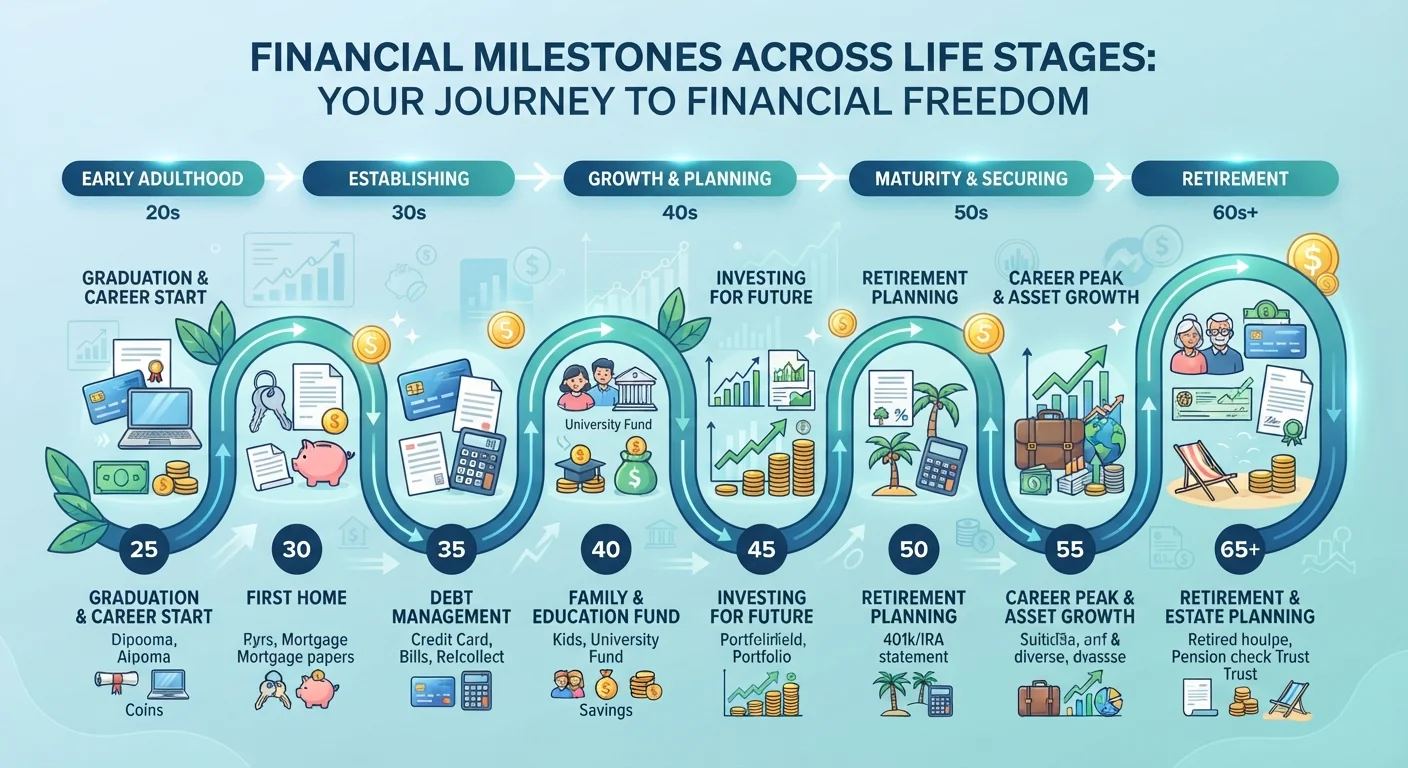
Credit is a financial tool - and like most tools, its appropriate use depends on what you're trying to build. A 22-year-old renting their first apartment has different credit priorities than a 45-year-old refinancing a mortgage or a 65-year-old managing fixed income. Understanding where you are in your financial life helps you make credit decisions that work for your actual situation rather than against it.
If you're unfamiliar with the terminology you'll encounter throughout this process - terms like APR, credit utilization, or hard inquiry - the plain-language reference guide is a solid starting point before diving into strategy.
This article covers the core practices that apply across adult life stages, noting where emphasis shifts as circumstances change. It is general financial education, not personalized advice - consult a licensed financial professional for guidance specific to your situation.
Early Adulthood: Building a Foundation That Lasts
The habits formed in your 20s carry outsized influence because credit history length is a factor in most scoring models. Starting responsibly - even on a small scale - positions you well for every subsequent decade.
Open your first credit account before you need it urgently
Credit history length is a meaningful factor in most scoring models. Applying for credit before a financial emergency gives you time to build a record without pressure, and prevents you from accepting unfavorable terms out of desperation.
Keep your credit utilization consistently below 30 percent
Utilization - the ratio of balances to credit limits - is one of the most influential factors in credit scoring. High utilization signals financial stress to lenders even when payments are on time.
Treat the payment due date as non-negotiable
Payment history is the single largest component of most consumer credit scores. Even one missed payment can have a measurable negative effect that persists for years.
Review your credit reports annually from all three major bureaus
Errors on credit reports are not uncommon, and inaccurate negative items can suppress your score unfairly. Consumers are entitled to free reports from each bureau periodically; AnnualCreditReport.com is the federally authorized source.
Limit hard credit inquiries to when they are purposeful
Each hard inquiry - generated when a lender checks your credit for an application - causes a minor, temporary score dip. Frequent inquiries in a short window can signal elevated lending risk.
Maintain a manageable credit mix rather than maximizing account count
Having both revolving accounts (credit cards) and installment accounts (loans) can benefit credit mix scores, but opening accounts purely for diversification creates unnecessary risk and inquiry impact.
For those starting from zero, the path to establishing a credit record is more accessible than many people realize. The guide to building credit from scratch walks through legitimate, lower-risk options worth considering. And if you're new to managing any debt at all, the essentials for first-time debt management covers the fundamentals that protect financial health early on.
Mid-Life: Managing Complexity and Larger Obligations
By your 30s and 40s, credit decisions often involve significantly larger sums - mortgages, auto loans, home equity lines - and the stakes of mismanagement are higher. This is also the stage when many Americans carry multiple credit accounts simultaneously, which requires active monitoring rather than passive assumption.
Debt load tends to peak in mid-life. If you find balances compounding faster than income grows, structured options exist. A nonprofit debt management plan may be appropriate for some situations - though it's worth understanding the mechanics and eligibility criteria before pursuing one.
Credit behavior in this stage also benefits from regular budget reviews. The budgeting basics hub offers practical frameworks for keeping monthly obligations in check alongside savings goals.
Later Adulthood: Simplification, Protection, and Maintenance
As income stabilizes or transitions - from earned wages to retirement distributions - the credit strategy that served you in earlier decades may need adjustment. The primary goals in later adulthood typically shift toward preserving score health, avoiding unnecessary borrowing, and protecting against fraud, which disproportionately affects older consumers.
35%
Weight of payment history in FICO scoring
According to FICO's publicly published scoring model breakdown, payment history is the single largest factor in a consumer's FICO credit score.
15%
Weight attributed to credit history length
FICO's published score factor breakdown attributes approximately 15 percent of a score to the length of a consumer's credit history, underscoring the value of keeping older accounts open.
Closing long-standing accounts in bulk is one of the more common mistakes in this stage. It can reduce the average age of your credit history and increase utilization ratios simultaneously - both negative signals to scoring models. A more measured approach is to keep older accounts open with minimal or occasional use.
Certain everyday financial habits can also erode credit scores gradually without obvious warning signs. The patterns that quietly damage credit over time is worth reviewing at any stage, but especially when maintaining a score built over decades. For broader financial health in this period, saving strategies across daily life can support overall stability.
This article is for general informational and educational purposes only. It does not constitute personalized financial, legal, or tax advice. Consult a qualified financial professional before making decisions about your credit or debt management.