

Key Takeaways
Why Mixing Training Styles Matters
Most people approach fitness as a single-discipline pursuit - they run every day, or they lift weights exclusively, or they attend yoga class and call it done. While any consistent movement is genuinely valuable, relying on one training style creates gaps. Your cardiovascular system, muscular strength, mobility, and metabolic fitness all respond to different kinds of stress. When you only train one system, the others quietly decline.
A well-designed week addresses all four major pillars: cardiovascular endurance, muscular strength, high-intensity conditioning, and mobility. This isn't about doing more - it's about doing smarter. Research published through organizations like the American College of Sports Medicine consistently supports multi-modal training as superior for overall health outcomes compared to single-mode approaches.
If you've struggled to keep a routine going, the structure of your week may be the problem rather than your motivation. See our guide on why routines collapse by week three for a deeper look at the behavioral patterns behind inconsistency.
If you can only fit three days of exercise per week, prioritize one strength session, one cardio session, and one yoga or mobility session - in that order. You'll cover all major systems without overloading your schedule.
Covering each training pillar even minimally preserves all-around fitness gains, while over-indexing on a single type leads to predictable gaps in strength, endurance, or flexibility.
Schedule your HIIT session on a day when you're well-rested - typically not the day after a heavy strength workout. Fatigued muscles performing high-intensity intervals increase injury risk without proportional benefit.
HIIT places significant demand on both the muscular and cardiovascular systems simultaneously; approaching it with accumulated fatigue compromises form and output.
What Each Training Style Actually Does
Understanding the distinct role each training type plays helps you appreciate why none of them is optional:
- Strength training builds and preserves lean muscle mass, supports bone density, improves metabolic rate, and protects joints. It uses resistance - whether weights, bands, or bodyweight - to create controlled muscle fatigue and stimulate adaptation.
- HIIT (High-Intensity Interval Training) alternates short bursts of intense effort with brief rest periods. It challenges the cardiovascular system and improves the body's ability to use oxygen efficiently. Because sessions are typically short, HIIT is practical for busy schedules.
- Cardio (steady-state) - like brisk walking, cycling, or jogging at a conversational pace - trains the aerobic energy system over longer durations. This style of training, sometimes called Zone 2 cardio, is strongly linked to heart health, metabolic efficiency, and longevity. Learn more in our overview of Zone 2 training.
- Yoga and mobility work restore range of motion, reduce tension from other training, support nervous system recovery, and build body awareness. These sessions make other workouts more effective by keeping joints healthy and muscles functional.
2x/week
Minimum strength training recommended for adults
The CDC's physical activity guidelines recommend adults engage in muscle-strengthening activities on at least two days per week.
150 min
Weekly moderate-intensity cardio target
U.S. Department of Health and Human Services guidelines suggest at least 150 minutes of moderate-intensity aerobic activity per week for general health.
20-30 min
Typical effective HIIT session length
Research consistently shows that HIIT sessions of 20-30 minutes produce meaningful cardiovascular and metabolic adaptations, making them efficient for time-limited schedules.
How to Structure Your Week
A practical balanced week for most adults looks like this across five active days, with two rest or light-activity days:
| Day | Training Focus | Approximate Duration |
|---|---|---|
| Monday | Strength (lower body) | 40-50 minutes |
| Tuesday | Steady-state cardio | 30-45 minutes |
| Wednesday | Strength (upper body) | 40-50 minutes |
| Thursday | HIIT or interval training | 20-30 minutes |
| Friday | Yoga or mobility work | 30-45 minutes |
| Saturday | Active rest (walking, light activity) | 20-30 minutes |
| Sunday | Full rest | - |
This isn't a rigid prescription - it's a starting framework. The key principle is alternating high-demand sessions with lower-demand ones so your body can absorb the training stimulus. Avoid scheduling two heavy strength sessions or two HIIT sessions back to back. For a deeper look at personalizing this structure, see our guide to building a weekly movement plan.
Recovery Is Part of the Plan
Fitness gains don't happen during workouts - they happen afterward, when your body repairs tissue and adapts to the demands you placed on it. Skipping rest days doesn't speed up progress; it typically reverses it by accumulating fatigue faster than your body can recover.
Signs you may be under-recovering include persistent muscle soreness beyond 72 hours, declining performance in sessions you normally handle well, disrupted sleep, and low motivation. These aren't signs of weakness - they're signals your body is managing more stress than it can currently adapt to.
Active rest - gentle walking, stretching, or casual movement - is a legitimate recovery strategy. It maintains blood flow and mobility without creating additional training load. Everyday activities like gardening or stair climbing can contribute meaningfully to your weekly movement without adding training stress.
This article provides general fitness information and is not a substitute for personalized advice from a qualified healthcare or fitness professional. Consult a professional before starting a new exercise program, especially if you have any health conditions or concerns.
Adjusting for Your Real Life
Five active days is a reasonable target, but not everyone starts there. If you're currently exercising one or two days a week, jumping to five is likely to feel overwhelming and unsustainable. Add one day at a time over several weeks, allowing your body and schedule to adapt gradually.
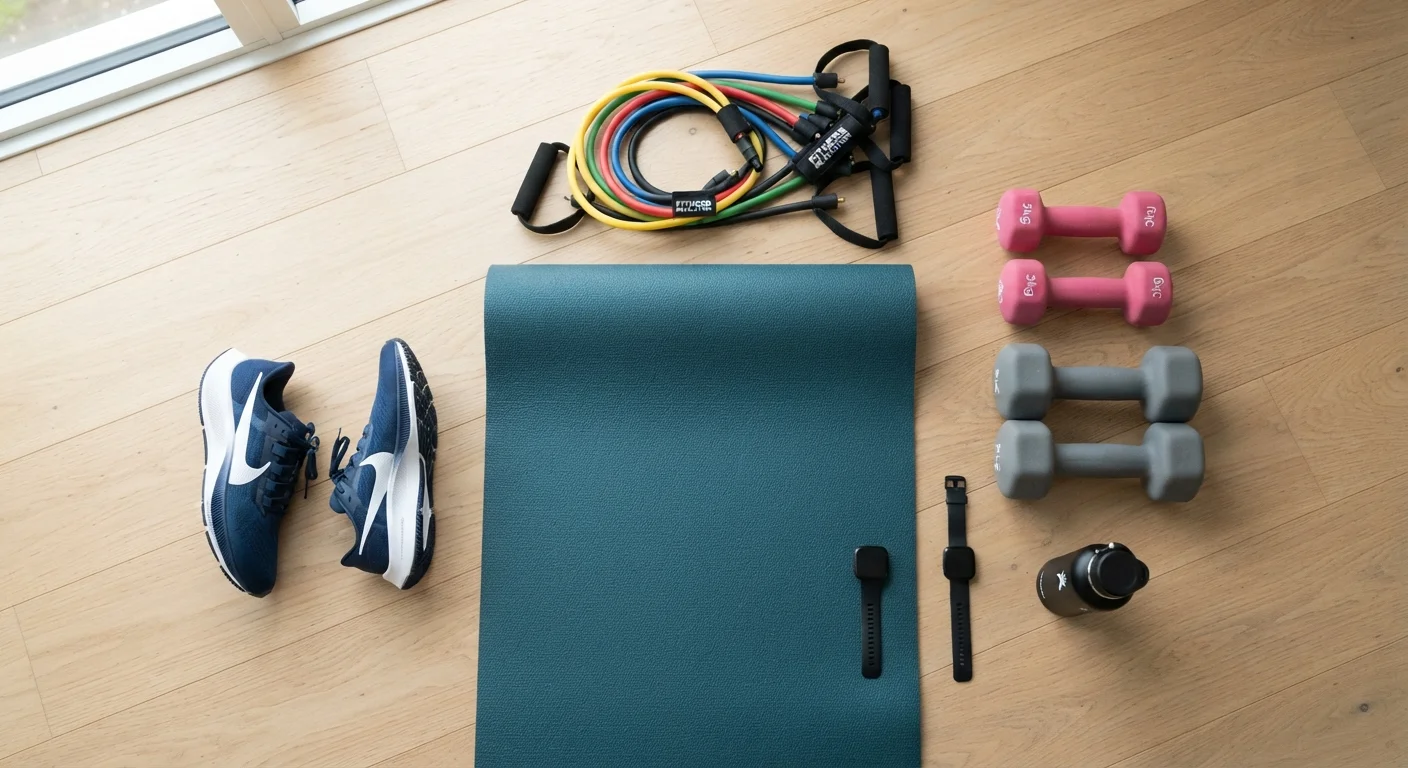
You also don't need a gym to follow a balanced week. Strength training can be done with resistance bands or bodyweight. HIIT requires only open space. Yoga and cardio are equally effective at home. For a clear-eyed comparison of home and gym training environments, see our breakdown of home workouts vs. gym training.
Finally, treat your schedule as a living document. Life changes - travel, illness, busy work periods - will interrupt even the best-designed week. The goal isn't perfection; it's returning to the plan with as little friction as possible. A single missed week doesn't undo your progress. Consistent effort over months and years is what produces lasting change.