

Key Takeaways
Two-Second Following Rule
The two-second rule is a widely taught driving guideline that instructs you to keep at least two seconds of travel time between your vehicle and the one directly in front. You measure this by picking a fixed roadside point and counting how long after the car ahead passes it before you reach the same spot. If you arrive in under two seconds, you are following too closely.
Two seconds translates to roughly one car length for every 10 mph, but actual stopping distance scales with the square of speed - meaning the rule becomes increasingly inadequate at highway velocities.
Where the Two-Second Rule Comes From
The two-second rule was developed as a simplified, easy-to-apply guideline that any driver could use without doing mental math at speed. It was designed to account for the average driver's perception-reaction time - typically estimated between 1.5 and 2.5 seconds - plus enough additional space to begin braking before impact.
The logic is straightforward: if the vehicle ahead stops suddenly, you need time to perceive the hazard, decide to brake, move your foot, and then allow the brakes themselves to slow the vehicle. Each of those steps takes time and space. Two seconds of gap gives a minimum cushion for that chain of events under normal conditions.
For a deeper look at how reaction time and braking distance combine into total stopping distance, see The Science Behind Stopping Distances at Highway Speeds.
~40%
Of rear-end crashes linked to following too closely
The NHTSA has identified tailgating and inattention as leading contributing factors in rear-end collision data.
4-10×
Stopping distance increase on ice vs. dry pavement
Studies on road surface friction consistently show ice can reduce tire grip to a fraction of dry-road performance, dramatically extending stopping distances.
1.5-2.5 sec
Average driver perception-reaction time
Transportation safety research estimates that most drivers take between 1.5 and 2.5 seconds from noticing a hazard to beginning to apply the brakes.
When Two Seconds Falls Short
The rule was built around ideal conditions: dry pavement, daylight, alert driver, well-maintained brakes, and moderate speed. The moment any of those variables changes, the math changes too.
Wet and Icy Roads
Water reduces tire-to-road friction significantly; ice can reduce it by a factor of three or more. Your brakes apply force, but the tires are what actually slow the car. On an icy surface, the braking distance that two seconds of space would cover in dry conditions may be far less than what you actually need.
Higher Speeds
Stopping distance increases with the square of speed - not linearly. Going from 30 mph to 60 mph does not double your stopping distance; it quadruples it. At 70 mph on an interstate, two seconds of following distance may give you around 205 feet, but total stopping distance for many vehicles at that speed can exceed that figure before the car is fully halted.
Driver Impairment and Fatigue
Fatigue alone can push perception-reaction time well beyond the average 1.5 seconds. A tired driver effectively has less buffer built into that two-second window before the braking phase even begins.
Towing or Carrying Heavy Loads
A loaded trailer or truck bed adds mass that your braking system was not solely designed to stop quickly. Braking distances increase proportionally with vehicle weight, making additional following distance essential.
Use the 'Four-Second Rule' as Your Highway Default
On interstates and highways where speeds are higher and stakes greater, consider defaulting to four seconds of following distance rather than two. Pick your landmark, let the car ahead pass it, and count to four before you reach the same point. This small habit can meaningfully expand your margin for error at speed.
A Practical Framework for Adjusting Your Distance
Rather than memorizing a chart, think of the two-second rule as your floor, not your target. Here is a practical way to scale up from there:
- Dry daytime conditions: 2-3 seconds minimum
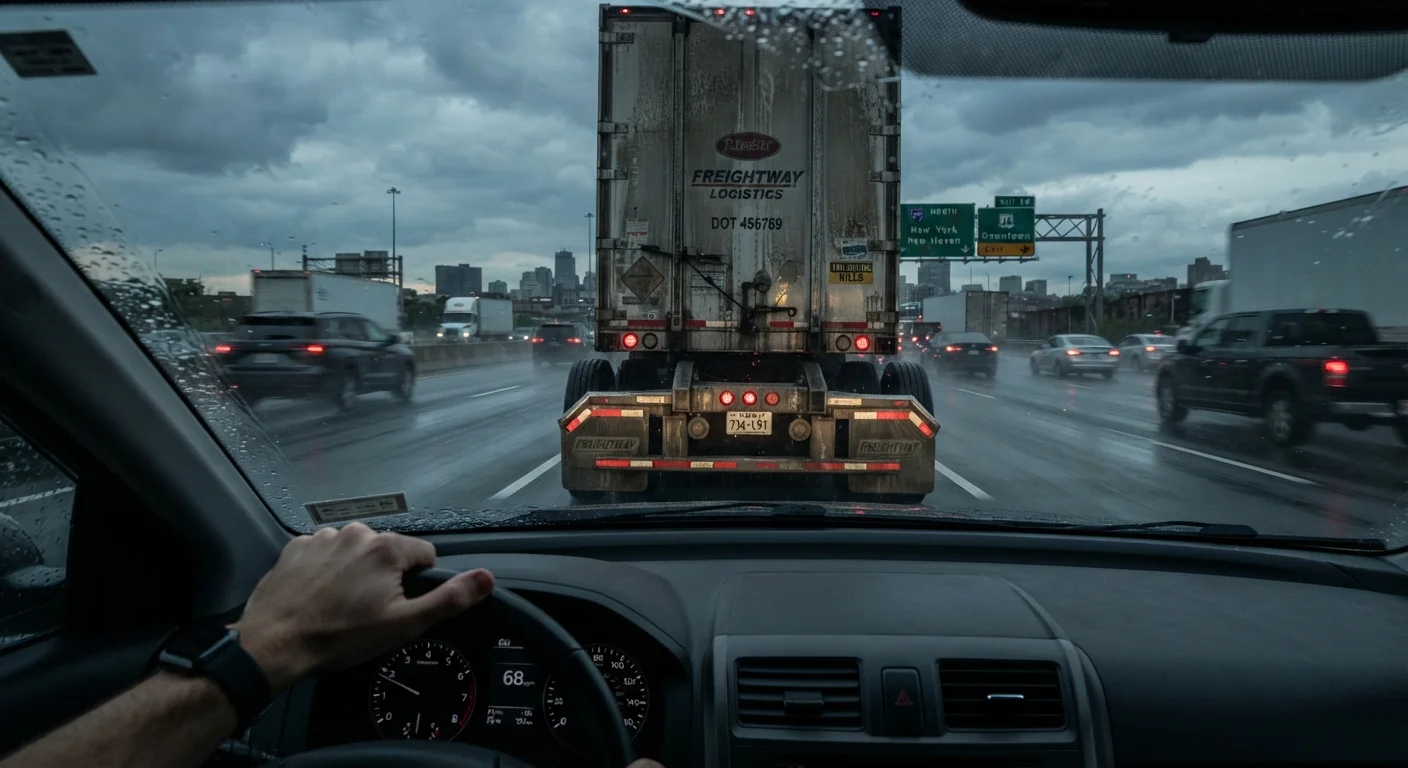
- Rain or light fog: 4 seconds
- Heavy rain, snow, or limited visibility: 5-6 seconds or more
- Ice or black ice suspected: Maximum practical distance - slow down first
- Towing a trailer: Add at least 1-2 extra seconds beyond baseline
These are general reference points, not guarantees of safety. Actual stopping distance also depends on your specific vehicle's brakes, tire condition, and load. Regularly checking tire tread depth and brake health is part of maintaining the safety margin that following distance alone cannot provide.
Speed choice matters just as much as spacing. As explained in Speed Limits Are a Ceiling, Not a Target, posted limits assume ideal conditions - your actual safe speed and safe following distance should both flex with what the road is giving you.
The Cost of Closing the Gap
Many drivers tailgate because they believe it pressures slower drivers to move over or saves meaningful travel time. In reality, the time gained by following closely on a typical trip is negligible - usually a matter of seconds over many miles. The risk taken, however, is substantial.
Rear-end collisions are among the most common crash types on US roads and are frequently linked to insufficient following distance and driver inattention. Unlike many accident types, they are also largely preventable through simple behavior: back off, slow down, and give yourself room to respond.
A larger following gap also reduces the need for hard braking, which can improve fuel economy and reduce wear on your brake pads over time - a practical benefit alongside the safety one.
This article is for general educational purposes. Always follow applicable traffic laws and adjust your driving to actual road conditions. When in doubt about your vehicle's braking capability or tire condition, consult a qualified mechanic.