

Key Takeaways
Start here
What Fuel Economy Actually Means
Next
The Main Factors That Affect Your MPG
Then
Driving Habits That Drain the Tank
Apply it
Simple Maintenance Steps That Make a Difference
Go further
How to Track and Interpret Your Real-World MPG
What Fuel Economy Actually Means
Fuel economy is simply a measure of how far your vehicle can travel on a given amount of fuel. In the United States, this is expressed as miles per gallon (MPG) - so a car rated at 30 MPG travels 30 miles on one gallon of gasoline under standard conditions.
The US Environmental Protection Agency (EPA) tests vehicles and publishes MPG ratings that appear on new-car window stickers and on the official fueleconomy.gov website. These figures are divided into city, highway, and combined ratings, reflecting different driving conditions. For a deeper look at how to read and use those labels, see The Driver's Complete Reference to Fuel Economy Ratings and Labels.
Understanding your vehicle's fuel economy is a foundational money skill. Even a modest improvement - say, gaining 3 MPG on a vehicle driven 12,000 miles a year - can translate to meaningful savings over time, particularly when fuel prices are elevated.
MPG (Miles Per Gallon)
The standard US measurement of fuel economy - how many miles a vehicle travels on one gallon of fuel. Higher MPG means greater efficiency and lower fuel costs per mile.
EPA Rating
Fuel economy figures published by the US Environmental Protection Agency based on standardized lab tests. They serve as a useful comparison benchmark but may differ from your real-world results.
Rolling Resistance
The friction force that slows a tire as it rolls along a surface. Under-inflated tires increase rolling resistance, making the engine work harder and use more fuel.
Aerodynamic Drag
The resistance a vehicle experiences as it pushes through air. Drag increases significantly at higher speeds, which is why highway fuel economy drops noticeably as speed rises above certain thresholds.
Combustion Efficiency
How completely and effectively an engine burns fuel during each power stroke. Worn components like spark plugs or a dirty air filter can reduce combustion efficiency, wasting fuel.
Idling
Running the engine while the vehicle is stationary. Idling consumes fuel without moving the car, making it one of the more straightforward sources of unnecessary fuel use.
The Main Factors That Affect Your MPG
Fuel economy isn't fixed - it's shaped by a combination of your vehicle, your environment, and your behavior. Broadly, these influences fall into three categories:
- Vehicle characteristics: Engine size, transmission type, vehicle weight, and aerodynamics all influence how much fuel is needed to move the car. Larger, heavier vehicles generally use more fuel per mile.
- Environmental conditions: Cold temperatures reduce efficiency because engines take longer to reach optimal operating temperature and because cold air is denser, creating more aerodynamic drag. Stop-and-go city traffic is harder on fuel economy than steady highway cruising.
- Driver behavior: This is where most drivers have the most control. Speed, acceleration patterns, idling time, and load management all directly affect how efficiently fuel is burned.
Many common assumptions about what does - and doesn't - help are worth questioning. Fuel Efficiency Myths That Are Costing Drivers Money addresses widespread misconceptions with evidence-based answers.
Driving Habits That Drain the Tank
Your foot on the pedal is one of the most powerful fuel economy variables you control. A few habits stand out as particularly costly:
- Hard acceleration: Pressing the accelerator heavily from a stop burns significantly more fuel than gradual acceleration. Anticipating traffic flow and building speed smoothly is one of the highest-impact changes a driver can make.
- High speeds: Aerodynamic drag increases substantially at higher speeds. Fuel economy typically drops noticeably above 50-60 mph, though the exact threshold varies by vehicle.
- Unnecessary idling: A running engine that isn't moving the vehicle is using fuel with zero return. If you're parked and waiting for more than a minute or so, turning the engine off (where safe and practical) is generally more efficient than idling.
- Carrying excess weight: Every extra pound the engine must move costs fuel. Clearing out cargo you don't need for a given trip is a no-cost improvement.
Smooth Driving Pays Off Immediately
Try treating the accelerator and brake pedal more gently for one full tank and then calculate your MPG. Many drivers notice a measurable improvement just from smoother inputs, with no mechanical changes required. Anticipating stops and coasting to a natural deceleration rather than braking hard is particularly effective in city driving.
For a comprehensive look at every lever available to you, Fuel Efficiency From Every Angle covers driving behavior, trip planning, and more in one place.
Simple Maintenance Steps That Make a Difference
You don't need mechanical expertise to keep your vehicle running efficiently. A handful of routine checks have a direct connection to fuel economy:
- Tire pressure
- Under-inflated tires increase rolling resistance, which means the engine must work harder. Check your tires monthly against the pressure listed on the sticker inside your driver's door jamb - not the maximum number printed on the tire itself.
- Air filter
- A clogged engine air filter restricts airflow to the engine, which can affect combustion efficiency. Most owners manuals recommend inspection at regular service intervals.
- Spark plugs
- Worn spark plugs can cause incomplete combustion, wasting fuel. Replacement intervals vary by vehicle - consult your owner's manual.
- Engine oil grade
- Using the viscosity grade recommended by your manufacturer helps reduce internal friction. Check the owner's manual rather than defaulting to whatever was last used.
For a broader look at keeping your vehicle in good shape, the Car Maintenance hub covers essential routines that support both reliability and efficiency.
How to Track and Interpret Your Real-World MPG
The most accurate picture of your vehicle's fuel economy comes from your own fill-up data - not the EPA sticker. Calculating it is straightforward:
- Fill your tank completely and note the odometer reading.
- Drive normally until the tank is low, then fill up again completely.
- Record the number of gallons pumped and the new odometer reading.
- Divide the miles driven by the gallons used. That's your MPG for that tank.
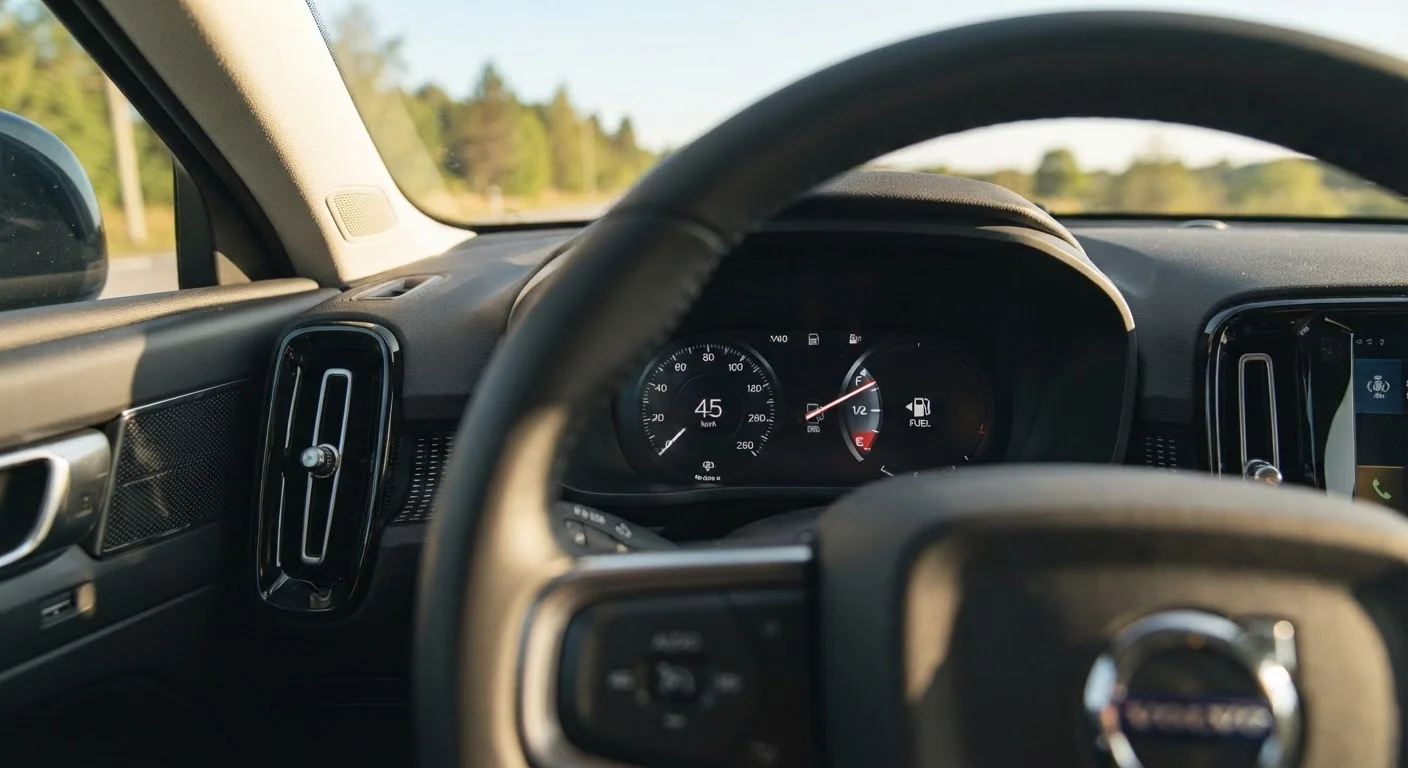
Repeating this over several fill-ups gives you a reliable average. Many modern vehicles also display a running MPG estimate in the instrument cluster, though these figures can vary slightly from the manual calculation.
Your MPG Will Vary by Season
Expect lower fuel economy in winter months. Cold engines take longer to warm up, cold air increases aerodynamic drag, and many drivers use more electrical accessories (heat, defrost, heated seats) that place additional load on the engine. This seasonal variation is normal and not necessarily a sign of a problem.
If your calculated MPG drops noticeably without a change in driving conditions, it can be an early signal that something needs attention - a tire losing pressure, an air filter due for replacement, or another maintenance item. Tracking your numbers turns fuel economy into a useful diagnostic tool, not just a cost metric.
When you're ready to go beyond the basics, use our road trip fuel efficiency checklist to prepare your vehicle before any long drive.