

Key Takeaways
Why Battery Myths Stick - And What They Actually Cost You
Car battery advice has been passed down through generations of drivers, mechanics, and well-meaning relatives. The problem is that automotive technology has evolved significantly while the folk wisdom hasn't. Acting on outdated beliefs - like idling to recharge or assuming a clean start means a healthy battery - leads to preventable breakdowns, unnecessary replacements, and repair bills that could have been avoided with accurate information.
Understanding how your battery actually works puts you in control. You'll know when to test, when to replace, and when the advice you're getting simply doesn't hold up. For a broader look at how common driving beliefs affect your wallet, see our coverage of fuel efficiency myths that cost drivers money.
Myth
Letting your car idle for 10-15 minutes will fully recharge a dead battery.
Fact
Idling produces very little charging current and cannot meaningfully restore a deeply discharged battery.
An alternator is designed to maintain a battery's charge during normal driving - not to recover a deeply depleted one. At idle, the alternator spins slowly and delivers only a fraction of the current needed for a full recharge. Recovering a significantly discharged battery can require sustained highway-speed driving for 30 minutes or more, and even then, deep discharges may shorten battery lifespan. A dedicated battery charger is the only reliable way to fully restore charge, especially after a dead-battery event.
Myth
Jump-starting a car will damage the vehicle's electronics.
Fact
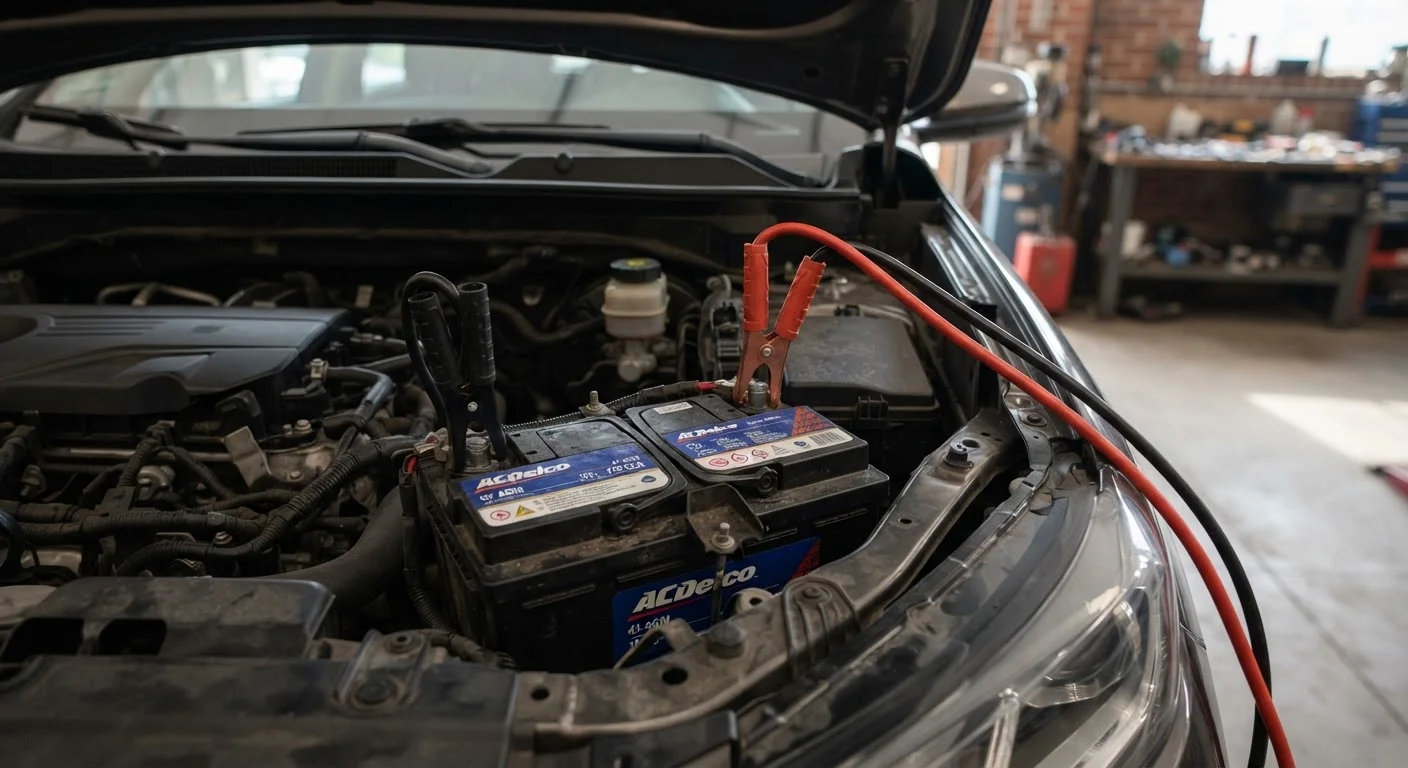
A correctly performed jump-start is safe for virtually all modern vehicles when cables are connected in the proper sequence.
The concern about electronics damage is not entirely unfounded - but it stems from improper technique, not jump-starting itself. Connecting cables out of sequence or letting clamps touch can cause voltage spikes. When done correctly (positive to positive, negative to a ground point away from the battery), the process is safe. Many manufacturers explicitly outline jump-start procedures in their owner's manuals because it is an expected and manageable event.
Myth
Cold weather is what kills car batteries.
Fact
Heat is actually more damaging to battery longevity; cold weather simply exposes existing weakness.
Batteries struggle to deliver full power in freezing temperatures, which is why cold mornings reveal failures. But the underlying damage often occurs during summer. Prolonged heat accelerates the internal chemical degradation and water loss inside the battery, reducing its overall capacity over time. Batteries weakened by a hot summer often fail visibly during the first serious cold snap - giving the false impression that cold weather caused the problem.
Myth
If your car starts fine, the battery is fine.
Fact
A battery can pass a basic start test but still be near the end of its usable life under load.
Resting voltage - the number you see on a basic multimeter - doesn't tell the full story. A load test simulates the high-current draw of engine cranking and reveals how much capacity the battery has actually retained. Batteries can maintain acceptable resting voltage while delivering far less current under demand. That gap is what causes unexpected failures. Load testing every two to three years, or before any long trip, is a prudent and inexpensive habit.
Myth
Disconnecting your battery is a harmless way to reset car problems.
Fact
Disconnecting the battery can erase important adaptive data and trigger warning lights that require professional diagnosis to clear.
Modern vehicles store calibration data for systems like transmission shift points, throttle response, and idle control. Disconnecting the battery resets these settings, which can temporarily affect drivability or cause a check-engine light to appear. On some vehicles, it also locks the radio or deactivates certain safety features until a code is re-entered. For most electrical faults, a proper scan tool diagnosis is a far less disruptive - and more informative - approach than pulling the battery cable.
Myth
A bigger battery is always better for your vehicle.
Fact
Installing a battery outside manufacturer specifications can stress your alternator and charging system.
Batteries are rated by Cold Cranking Amps (CCA) and Reserve Capacity (RC), and vehicle charging systems are calibrated for a specific range. Installing a battery with significantly higher capacity than specified doesn't give your vehicle more power - it may simply take longer to charge, putting extra load on the alternator over time. Always match or stay within the range specified in your owner's manual. Upsizing beyond that range offers no meaningful benefit for the average driver.
What the Evidence Actually Shows
The six myths above share a common thread: they each sound plausible, which is exactly why they persist. Batteries are largely invisible systems - drivers rarely interact with them until something goes wrong. That invisibility creates fertile ground for misconceptions to take root and spread.
Don't Skip Battery Testing
A battery that seems fine on a Monday morning can fail completely by Friday - especially in temperature extremes. Most auto parts retailers offer free load testing, which measures how well your battery performs under real starting conditions, not just resting voltage. Getting tested before symptoms appear is one of the most cost-effective habits a driver can build.
The most cost-effective approach is proactive: load-test your battery every two to three years, pay attention to slow cranking or dim lights (both early warning signs), and resist the urge to troubleshoot electrical gremlins by yanking the battery cable. If your vehicle is showing warning lights or unusual electrical behavior, a diagnostic scan will give you far more actionable information than a reset. These habits won't just protect your battery - they'll protect the alternator, starter, and other components that a struggling battery can stress over time.
Improper Jump-Start Connections Cause Real Damage
Connecting jumper cables in the wrong order or to incorrect terminals can cause voltage spikes that damage sensitive electronics, fuses, or the alternator. Always connect positive to positive and negative to an unpainted ground point on the dead vehicle - never directly to the negative battery terminal. If you're unsure, consult your owner's manual before proceeding.
For a look at how similar misconceptions affect safe driving habits more broadly, the distracted driving myths article applies the same evidence-first approach to a very different but equally important topic.
This article is for general informational purposes only. For specific vehicle maintenance decisions, consult a qualified mechanic or refer to your vehicle's owner's manual.