

Key Takeaways
Why Cats Face Unique Toxicity Risks
Cats are not small dogs - their liver metabolism works differently from most mammals, making them far less capable of processing many compounds that other animals tolerate with little trouble. This biological reality means that substances harmless to humans or dogs can cause rapid, serious harm to a cat. Because cats groom themselves constantly and explore their environment with their mouths and paws, exposure can happen through ingestion, skin contact, or even inhalation.
Understanding which everyday household items pose a risk is one of the most practical things a cat owner can do. This reference covers four major categories: indoor plants, human foods, household cleaning products, and medications. It is not exhaustive, but it covers the hazards most frequently encountered in US homes.
This article is for general informational purposes only and is not veterinary medical advice. Always consult a licensed veterinarian if you have concerns about your cat's health or a potential exposure to a toxic substance.
A Note on Toxic Dose and Individual Sensitivity
Toxicity in cats depends on multiple factors: the specific compound, the amount ingested, the cat's body weight, age, and overall health status. Some hazards (like true lilies) cause serious harm at very small doses; others require larger or repeated exposures to produce visible symptoms. This variability does not make lower-risk items safe - it means that any suspected exposure warrants prompt veterinary contact rather than a wait-and-see approach. When in doubt, call your vet or an animal poison control line before symptoms appear.
Common Toxic Hazards - and What Makes Them Dangerous
Lilies (True Lilies and Daylilies)
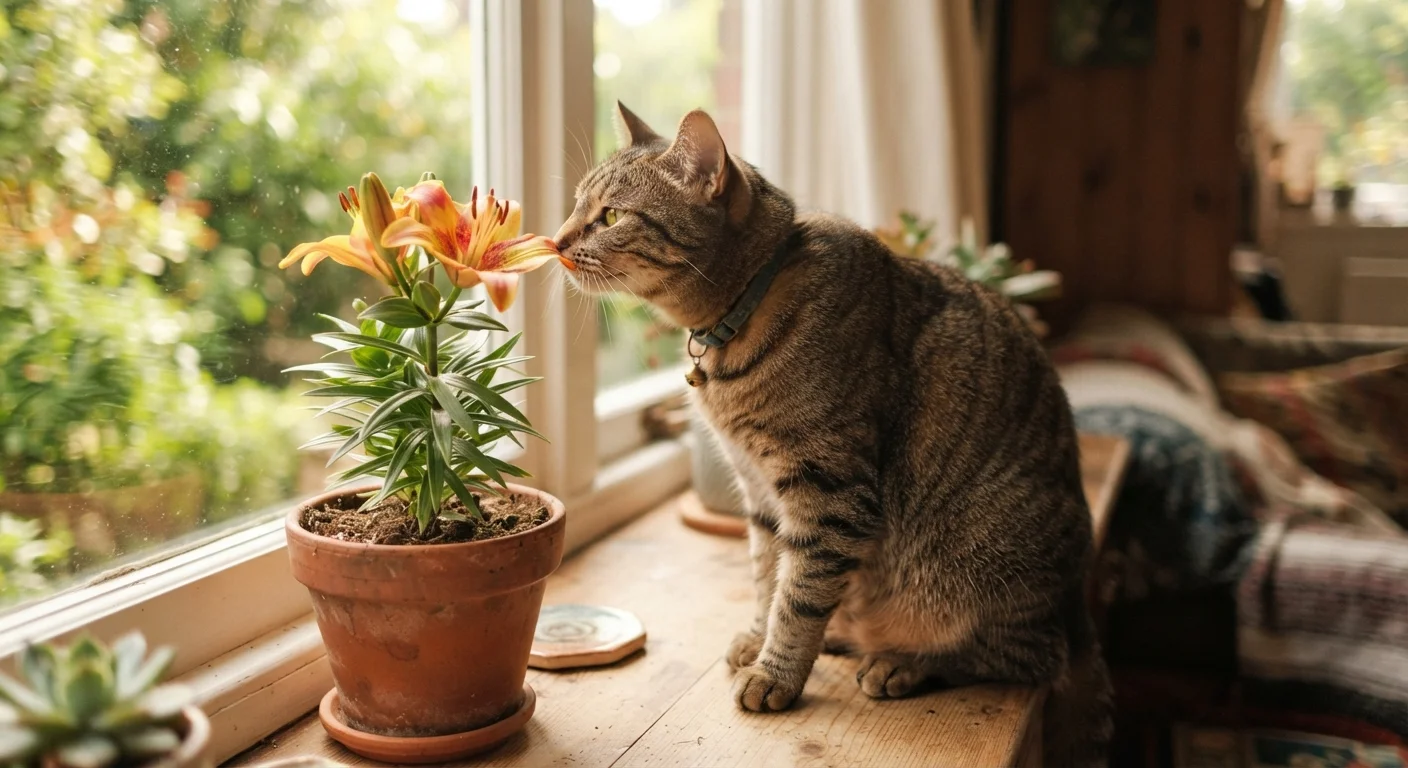
Plants in the Lilium and Hemerocallis genera - including Easter lilies, tiger lilies, Asiatic lilies, and daylilies - are among the most acutely dangerous plants a cat can encounter. Even small exposures, such as chewing a single leaf or drinking water from a vase containing cut lilies, can cause acute kidney failure in cats. Symptoms typically begin within hours and include vomiting, lethargy, and loss of appetite, progressing to kidney shutdown without prompt treatment. Peace lilies and calla lilies belong to different plant families and cause different (primarily oral irritation) effects, but are still considered toxic.
Even a small amount of true lily - one leaf or vase water - can trigger kidney failure in cats.
Sago Palm
The sago palm (Cycas revoluta) is a popular decorative plant, but every part of it - seeds, leaves, and roots - contains cycasin, a toxin that causes severe liver damage and can be fatal. The seeds (also called nuts) carry the highest concentration. Sago palm poisoning is considered a veterinary emergency, with symptoms that can include vomiting, diarrhea, jaundice, and neurological signs. Because of its widespread availability as a landscaping and indoor ornamental plant, it remains a frequent source of serious toxicity cases in cats and dogs alike.
Every part of the sago palm is toxic, with the seeds posing the greatest risk of fatal liver damage.
Pothos, Philodendron, and Other Aroids
Pothos (Epipremnum aureum), philodendrons, dieffenbachia, and many related houseplants contain insoluble calcium oxalate crystals. When a cat chews these plants, the crystals penetrate soft tissue in the mouth and gastrointestinal tract, causing intense burning, drooling, pawing at the mouth, swelling, and difficulty swallowing. While these plants are generally less likely to cause organ failure than lilies, the oral pain and swelling can be severe enough to interfere with breathing in significant exposures. Their popularity as easy-care indoor plants makes them a common hazard.
Calcium oxalate crystals in pothos and philodendrons cause immediate, painful oral burning in cats.
Onions, Garlic, and Alliums
All members of the allium family - onions, garlic, leeks, chives, and shallots - are toxic to cats whether raw, cooked, powdered, or dehydrated. These plants contain compounds called organosulfoxides that damage red blood cells, leading to a condition called hemolytic anemia. Garlic is considered more potent than onion on a per-weight basis. Because garlic and onion powders are concentrated, even small amounts of seasoning - such as those found in baby food or broths - can be harmful. Cats may not show signs immediately; symptoms like weakness, pale gums, rapid breathing, and collapse can develop days after repeated or large exposures.
Garlic and onion in any form - including powder - can cause red blood cell destruction in cats.
Grapes and Raisins
Grapes and raisins are well-established as toxic to dogs, but the evidence also warrants caution with cats. The exact mechanism causing kidney damage is not yet fully understood, and sensitivity varies - but because no safe threshold has been established, veterinary consensus treats any exposure as potentially serious. Raisins, which are dried and concentrated, are considered higher-risk than fresh grapes. Given that the toxic dose and mechanism remain unclear, even small amounts should prompt contact with a veterinarian. Grapes and raisins frequently appear in snacks, baked goods, and trail mixes accessible to curious cats.
No safe amount of grapes or raisins has been established for cats - treat any exposure as urgent.
Xylitol
Xylitol is a sugar alcohol used as a sweetener in a wide range of products: sugar-free gum, certain peanut butters, mouthwash, vitamins, and some baked goods. In dogs, xylitol is well-documented to cause dangerous drops in blood sugar and liver damage. Evidence specific to cats is less extensive, but veterinary guidance generally recommends treating xylitol as a hazard for cats as well, given the physiological similarities in how the compound is metabolized and the potential severity of effects. Always check ingredient labels on human foods before allowing any cat access.
Xylitol appears in many sugar-free products and is considered a potential toxin for cats as well as dogs.
Acetaminophen and NSAIDs
Acetaminophen (the active ingredient in Tylenol and many combination cold and pain products) is highly toxic to cats at doses that would be considered low or safe for humans. Cats lack the liver enzyme needed to safely metabolize it, leading to damage of red blood cells and liver tissue. Even a single regular-strength tablet can be lethal to a cat. Ibuprofen and naproxen - common over-the-counter NSAIDs - can also cause gastrointestinal ulcers and kidney failure in cats. Never give a cat any human pain reliever without direct veterinary instruction. This is one of the most preventable causes of accidental cat poisoning in US households.
A single acetaminophen tablet can be fatal to a cat - never give human pain relievers without vet guidance.
Household Cleaning Products
Bleach, disinfectant sprays, drain cleaners, toilet bowl cleaners, and phenol-based products (often found in pine-scented cleaners) can all cause harm to cats through direct contact, ingestion from grooming contaminated paws, or inhalation of fumes. Phenols are of particular concern because cats are especially sensitive to them and cannot effectively metabolize phenolic compounds. Symptoms can include drooling, vomiting, difficulty walking, respiratory distress, and chemical burns to the mouth or skin. After using cleaning products, ensure surfaces dry completely and are well-ventilated before allowing cat access, and store all products in secured cabinets.
Phenol-based pine cleaners are especially dangerous to cats, who cannot safely metabolize phenolic compounds.
Essential Oils
The popularity of essential oil diffusers and aromatherapy products has introduced a newer category of household risk for cats. Many essential oils - including tea tree (melaleuca), eucalyptus, peppermint, clove, and citrus oils - are toxic to cats, even at relatively low concentrations. Cats can be exposed through skin contact (from topical application or walking across surfaces where oil has dropped), ingestion during grooming, or prolonged inhalation from active diffusers. Symptoms of essential oil toxicity can include drooling, tremors, difficulty walking, respiratory distress, and liver damage. Passive diffusers, direct application, and sprays carry the greatest risk.
Tea tree and eucalyptus essential oils can cause neurological symptoms and liver damage in cats through inhalation or skin contact.
Build a Cat-Safe Home Before Problems Start
The most effective approach to toxin exposure is prevention rather than response. Keep toxic plants out of the home entirely rather than placing them out of reach - cats are agile and persistent explorers. Store medications and cleaning products in latched cabinets, and read labels on any human food before leaving it accessible. For a comprehensive room-by-room review, see our home preparation checklist for new and existing cat owners.
What to Do If You Suspect Poisoning
Speed matters when a cat has been exposed to something toxic. Do not wait for symptoms to worsen before acting. Keep two numbers accessible at all times: your primary veterinarian's emergency line and a 24-hour animal poison control hotline. In the US, the ASPCA Animal Poison Control Center and the Pet Poison Helpline both provide around-the-clock guidance - note that a consultation fee may apply.
When you call, have as much information ready as possible: what the cat was exposed to, approximately how much, when the exposure occurred, and any symptoms you have already observed. Do not attempt to induce vomiting unless a veterinary professional explicitly instructs you to do so, as this can make certain poisonings worse.
Proactive home management reduces risk significantly. Walk through your home room by room to identify and relocate hazards before a cat ever encounters them. For ongoing health monitoring across every life stage, a structured annual health calendar can help you stay ahead of potential issues. And if you've ever wondered whether some of your cat-safety instincts are based on myth rather than evidence, common veterinary myths are worth reviewing.