

Key Takeaways
Saves money on routine maintenance visits
Handling brushing and nail trims at home reduces how often a professional groomer is needed, which can meaningfully lower annual pet care costs.
Allows early detection of health issues
Regular hands-on grooming gives owners the opportunity to notice changes in skin condition, coat texture, lumps, or parasite activity before they become serious.
Strengthens the human-cat bond
Gentle, consistent grooming sessions - when introduced gradually - can become a positive ritual that builds trust between cat and owner.
Reduces stress of infrequent groomer visits
Cats groomed regularly at home are typically calmer and more manageable during professional appointments because handling is already familiar.
Flexible timing and frequency
Owners can adjust grooming frequency to their cat's individual coat type and shedding patterns without scheduling constraints.
Risk of injury without proper technique
Cutting nails too short, poking into the ear canal, or using scissors near matted fur can cause pain, bleeding, or infection - especially with a cat that won't stay still.
Difficult with anxious or resistant cats
Some cats find handling deeply stressful and may scratch or bite during grooming, creating a negative association that makes future sessions harder.
Long-haired breeds require significant time
Daily brushing and mat prevention for breeds like Maine Coons or Persians is a genuine time commitment that some owners underestimate.
Dental care is challenging to execute correctly
Most cats resist tooth brushing, and owners who skip the proper introduction process often give up entirely - leaving dental health unmanaged.
No substitute for professional dental cleanings
Home brushing supports oral health but cannot remove established tartar; veterinary cleanings under anesthesia remain necessary and are outside what home grooming can replace.
Our Verdict
Home grooming is a realistic and cost-conscious option for most cat owners when limited to brushing, surface-level nail trims, and gentle eye care. However, tasks involving the ears, teeth, or heavily matted coats carry a real risk of injury or worsening the problem if performed without experience. A hybrid approach - handling routine maintenance at home while scheduling periodic professional sessions - tends to serve cats and their owners well.
Best suited for owners of short- to medium-coated cats who are comfortable being handled and have been gradually introduced to grooming from a young age.
What Home Grooming Can Realistically Accomplish
Cats are self-groomers by nature, but that doesn't mean they handle everything on their own. Regular owner-led grooming supports coat health, helps catch early signs of skin issues, parasites, or lumps, and deepens the bond between cat and owner. For new cat owners, understanding what grooming tools and routines to set up from the start makes a meaningful difference.
The tasks most owners can manage at home with modest preparation include:
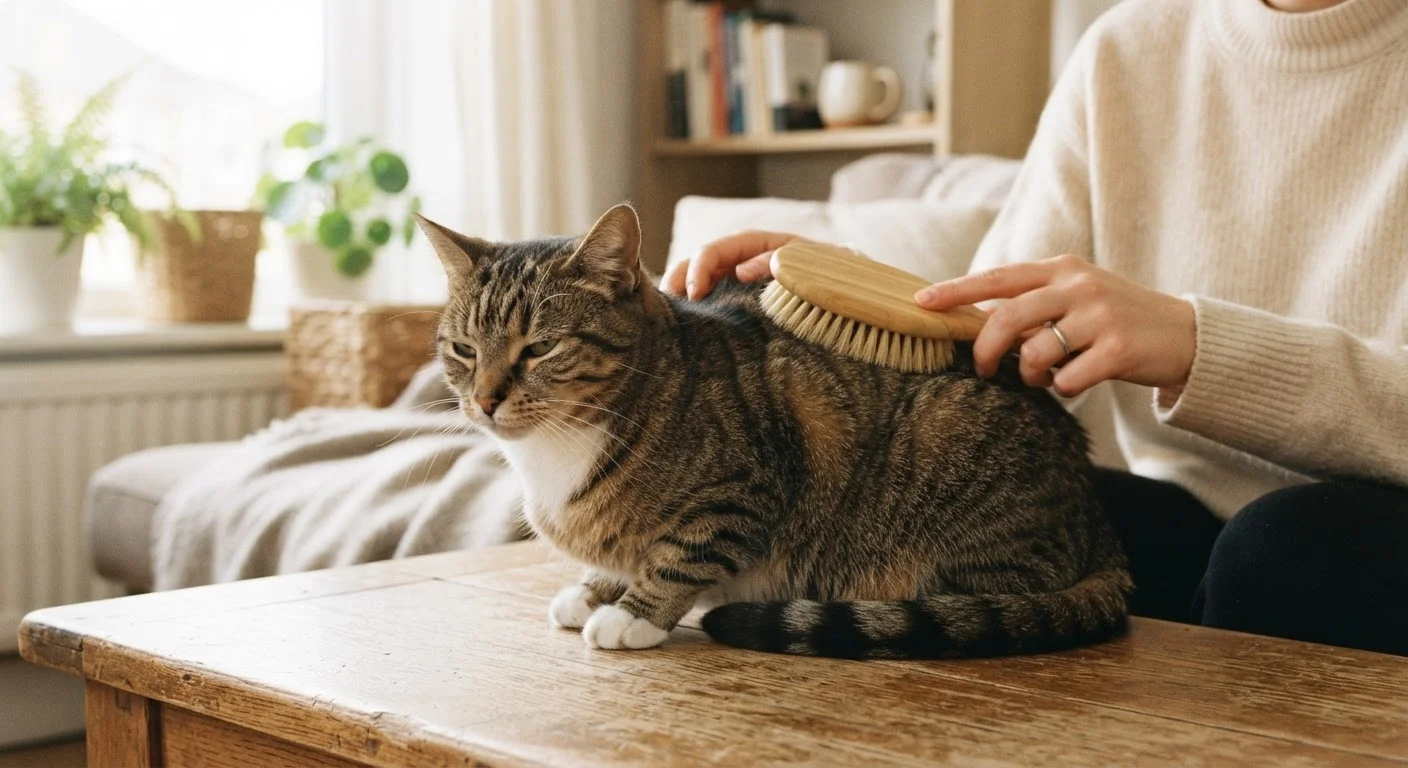
- Brushing: Short-haired cats typically need brushing once or twice a week; long-haired breeds may need daily attention to prevent tangles. A slicker brush or fine-toothed comb works well for most coat types.
- Nail trimming: Cat nails should be trimmed every two to four weeks to prevent overgrowth and snagging. Use purpose-made cat nail clippers, clip only the transparent tip, and avoid the pink "quick" - the blood vessel inside the nail.
- Eye discharge removal: Some cats, especially flat-faced breeds, accumulate crust around the eyes. A damp cotton pad wiped gently outward from the inner corner keeps the area clean.
- Coat checks: Running your hands through the fur regularly lets you spot fleas, ticks, unusual lumps, or skin irritation early.
Saves money on routine maintenance visits
Handling brushing and nail trims at home reduces how often a professional groomer is needed, which can meaningfully lower annual pet care costs.
Allows early detection of health issues
Regular hands-on grooming gives owners the opportunity to notice changes in skin condition, coat texture, lumps, or parasite activity before they become serious.
Strengthens the human-cat bond
Gentle, consistent grooming sessions - when introduced gradually - can become a positive ritual that builds trust between cat and owner.
Reduces stress of infrequent groomer visits
Cats groomed regularly at home are typically calmer and more manageable during professional appointments because handling is already familiar.
Flexible timing and frequency
Owners can adjust grooming frequency to their cat's individual coat type and shedding patterns without scheduling constraints.
Where Home Grooming Gets Complicated
Several grooming tasks sit in a gray zone - doable in principle, but risky without the right knowledge or a cooperative cat.
Ear cleaning is one area where caution matters most. A light wipe of the outer ear flap with a vet-approved solution is generally safe, but probing deeper into the ear canal can pack debris further in or damage delicate structures. Any sign of dark discharge, strong odor, or head-shaking warrants a vet visit rather than a home cleaning attempt.
Dental care is essential but often skipped. While daily tooth brushing with cat-formulated toothpaste is the gold standard recommended by veterinary dental specialists, introducing this habit to an adult cat that has never experienced it can be very difficult. Starting slowly - with finger brushes and gradual desensitization - improves success rates, but professional dental cleanings under anesthesia remain necessary for full assessment and tartar removal.
Mat removal in long-haired cats is another common sticking point. Superficial tangles can sometimes be worked through with a wide-toothed comb and a detangling spray, but dense mats close to the skin should not be cut with scissors - the risk of nicking the skin is high. A professional groomer or veterinary team with clippers is the safer option.
Risk of injury without proper technique
Cutting nails too short, poking into the ear canal, or using scissors near matted fur can cause pain, bleeding, or infection - especially with a cat that won't stay still.
Difficult with anxious or resistant cats
Some cats find handling deeply stressful and may scratch or bite during grooming, creating a negative association that makes future sessions harder.
Long-haired breeds require significant time
Daily brushing and mat prevention for breeds like Maine Coons or Persians is a genuine time commitment that some owners underestimate.
Dental care is challenging to execute correctly
Most cats resist tooth brushing, and owners who skip the proper introduction process often give up entirely - leaving dental health unmanaged.
No substitute for professional dental cleanings
Home brushing supports oral health but cannot remove established tartar; veterinary cleanings under anesthesia remain necessary and are outside what home grooming can replace.
The Case for Professional Grooming
Professional groomers who specialize in cats (look for those who use cat-only or low-stress handling environments) bring expertise and equipment that go beyond what most owners can replicate at home. They're trained to work efficiently with anxious or uncooperative cats, can handle full-body clips for heavily matted coats, and are better positioned to spot early skin or coat abnormalities.
The cost of occasional professional grooming sessions can be easier to absorb when built into a broader pet budget. If you're thinking through the full financial picture of cat ownership, it's worth reviewing what ongoing care expenses look like across pet types to set realistic expectations.
When to Involve Your Veterinarian
Grooming is not purely cosmetic - it intersects with health. If you notice redness, swelling, unusual odor, excessive scratching, or any skin abnormality during a grooming session, stop and contact your vet rather than attempting to treat the issue at home. Cats are also skilled at masking discomfort, so resistance to grooming that seems sudden or extreme may signal an underlying problem worth investigating professionally.
Cats with anxiety, a history of aggression during handling, or health conditions like arthritis may find any grooming session stressful. In these cases, consulting your veterinarian before attempting grooming at home - or asking about sedation-assisted professional grooming - is advisable. Understanding a cat's behavioral baseline, as discussed in our guide on common feline health misconceptions, can also help owners interpret their cat's reactions more accurately.
Building a Grooming Routine That Sticks
The most reliable predictor of successful home grooming is how early and consistently it's introduced. Kittens who are gently handled - paws touched, ears examined, mouths briefly opened - during their socialization window (roughly two to seven weeks) are far more likely to tolerate grooming as adults. Adult cats can adapt too, though the process requires more patience and shorter, more frequent sessions. For a broader look at how kitten and adult cat care needs differ, see our comparison of kitten versus adult cat care.
A practical home grooming schedule for most cats:
- Brush coat: 1-7 times per week depending on coat length
- Trim nails: Every 2-4 weeks
- Wipe eyes: As needed, typically weekly for flat-faced breeds
- Check ears visually: Monthly; clean outer flap only if debris is visible
- Brush teeth: Daily if possible; every few days at minimum
Keep sessions short - five to ten minutes - and end them before the cat shows signs of stress. Treats and calm handling make the experience more positive over time.
This article is for general informational purposes only and does not constitute veterinary advice. Always consult a licensed veterinarian for concerns about your cat's health or specific grooming needs.