

Key Takeaways
Why Most Utility Advice Misses the Point
A lot of popular energy-saving advice focuses on the smallest wins - turning off a light when you leave a room, using cold water for rinsing dishes. These habits are fine, but they won't move the needle on your monthly bill in any meaningful way. The U.S. Department of Energy has consistently found that the vast majority of residential energy spending is concentrated in just a few categories: space heating and cooling, water heating, and major appliances. That's where your attention belongs.
This list focuses on changes that have a measurable, documented impact - not theoretical micro-savings. Some require a modest upfront investment; others cost nothing but a few minutes. All of them are grounded in how energy is actually consumed in a typical American household. If you're working toward broader financial goals, this kind of recurring expense reduction pairs well with the strategies covered in our complete savings guide.
Optimise Your Thermostat Settings
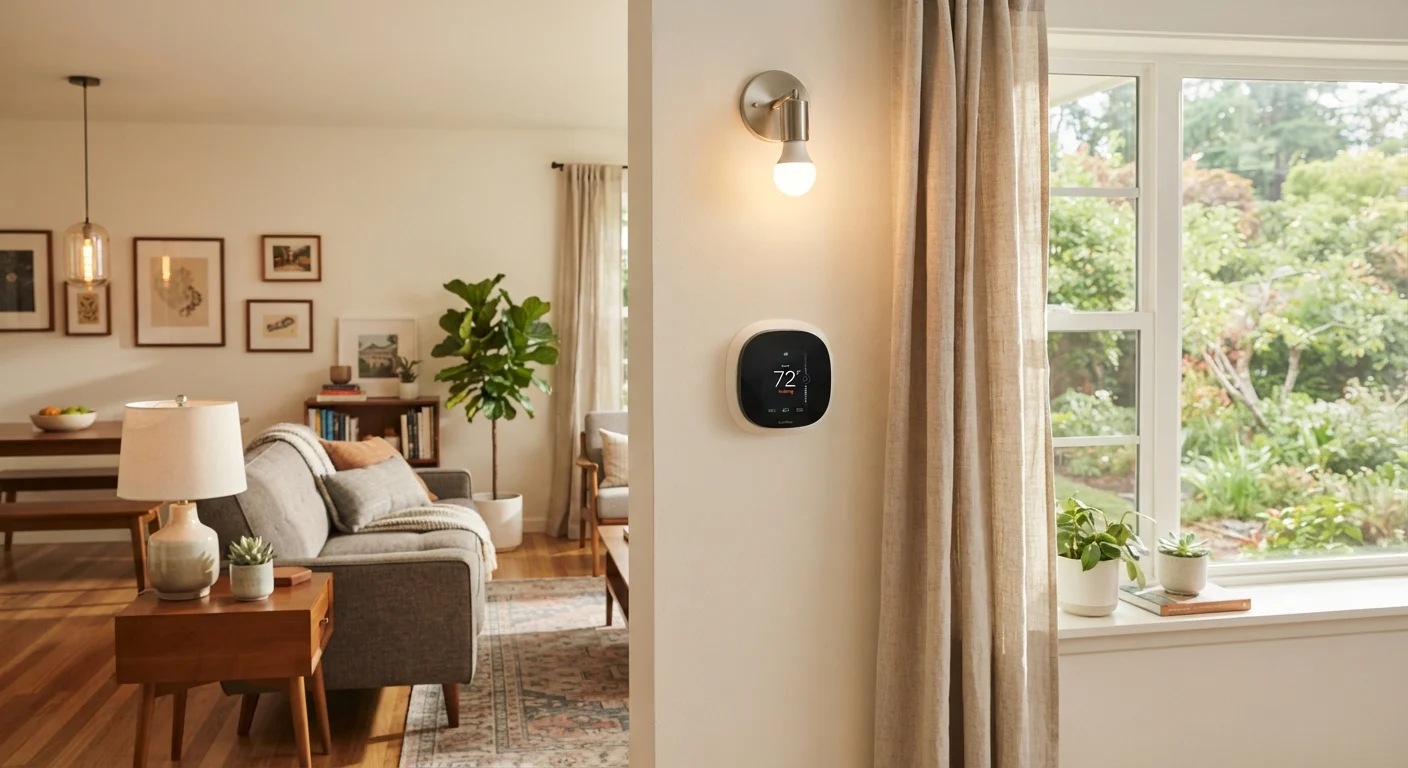
Heating and cooling typically represent 40-50% of a home's total energy bill, according to the U.S. Department of Energy. Adjusting your thermostat by 7-10°F for eight hours a day - while you're asleep or away - can reduce that portion of your bill by around 10% annually. A programmable or smart thermostat automates this without requiring daily action. The upfront cost of a basic programmable model is modest, and the efficiency gains are well-documented.
The key is setting schedules that reflect your actual routine rather than leaving the thermostat at a fixed comfortable temperature around the clock.
Adjusting temperature for eight hours a day can cut heating and cooling costs by roughly 10% annually.
Lower Your Water Heater Temperature
Many water heaters ship from the factory set to 140°F. The Department of Energy recommends 120°F for most households - it's sufficient for sanitation, reduces scalding risk, and meaningfully lowers standby heat loss. This single free adjustment can cut water heating energy use by 4-22%, depending on your current setting and usage patterns.
If your water heater is more than 10-12 years old and you're already considering replacement, an ENERGY STAR-certified heat pump water heater uses significantly less electricity than a conventional electric resistance model - though that's a capital decision worth evaluating against your specific situation.
Dropping your water heater to 120°F costs nothing and can reduce water heating energy use by up to 22%.
Seal Air Leaks Before Upgrading Equipment
Homeowners frequently assume that upgrading to a more efficient HVAC unit is the right first step. In reality, if a home has significant air leaks - around doors, windows, electrical outlets, and attic hatches - even a high-efficiency system will struggle. The EPA's ENERGY STAR program estimates that sealing and insulating can save roughly 15% on heating and cooling costs.
Weatherstripping and caulk are inexpensive materials. A professional energy audit can identify where the biggest leaks are, but a simple walk-through on a windy day - feeling for drafts near window frames and door edges - often reveals the worst offenders quickly.
Sealing air leaks and improving insulation often delivers more value than replacing HVAC equipment outright.
Eliminate Phantom Loads from Standby Power
Electronics and appliances draw power even when switched off or idle - this is called standby power or phantom load. The Lawrence Berkeley National Laboratory has estimated that standby power can account for 5-10% of a typical household's electricity use. Common culprits include TVs, game consoles, cable boxes, desktop computers, and phone chargers left plugged in.
Smart power strips that cut power to peripheral devices when the primary device is off are an effective and low-cost solution. For devices you use infrequently, simply unplugging them is the most straightforward approach.
Standby power from idle electronics can quietly consume 5-10% of your total household electricity.
Shift High-Energy Tasks to Off-Peak Hours
Many utility providers use time-of-use (TOU) pricing, where electricity costs more during peak demand periods - typically late afternoon and early evening on weekdays. If your provider uses TOU rates, running the dishwasher, washing machine, or dryer after 9 p.m. or before noon can reduce the per-kilowatt-hour cost of those tasks substantially.
Check your utility bill or provider's website to confirm whether TOU rates apply to your account. If they do, even shifting two or three high-draw tasks per week can produce noticeable savings over a billing cycle without changing what you actually do - only when you do it.
In time-of-use rate markets, shifting laundry and dishwashing to off-peak hours can cut per-task electricity costs meaningfully.
Replace Incandescent Bulbs With LEDs Throughout the Home
LED bulbs use roughly 75% less energy than incandescent bulbs and last significantly longer - up to 25 times, according to the Department of Energy. For households that haven't yet made the switch, this is one of the clearest cost-per-dollar improvements available. The savings are modest on a per-bulb basis but accumulate across a whole home, especially in rooms with fixtures left on for extended periods.
Focus first on fixtures that are used most frequently - kitchen overhead lighting, living room lamps, and outdoor security lights - rather than replacing every bulb at once. The savings are front-loaded in high-use areas.
LED bulbs use 75% less energy than incandescent bulbs - a straightforward upgrade with reliable, documented savings.
Putting It All Together
None of these changes require you to overhaul your lifestyle. The pattern that works is straightforward: address the biggest energy draws first, make free adjustments immediately, then evaluate whether targeted upgrades make sense given your home's age and your existing equipment. Tackling one item per month is a realistic pace that prevents overwhelm and lets you track which changes actually show up on your bill.
If you're also looking to cut transportation costs, many of the same evidence-over-myth principles apply - see common fuel efficiency myths debunked for a similar reality check on driving habits. Building utility savings alongside a consistent saving habit creates a compounding effect on your household budget. For a structured approach to that habit formation, starting a savings habit from zero is a practical next step.
This article is for general informational purposes only and does not constitute personalised financial or home-improvement advice. Consult a qualified professional for guidance specific to your circumstances.