

Key Takeaways
Option A
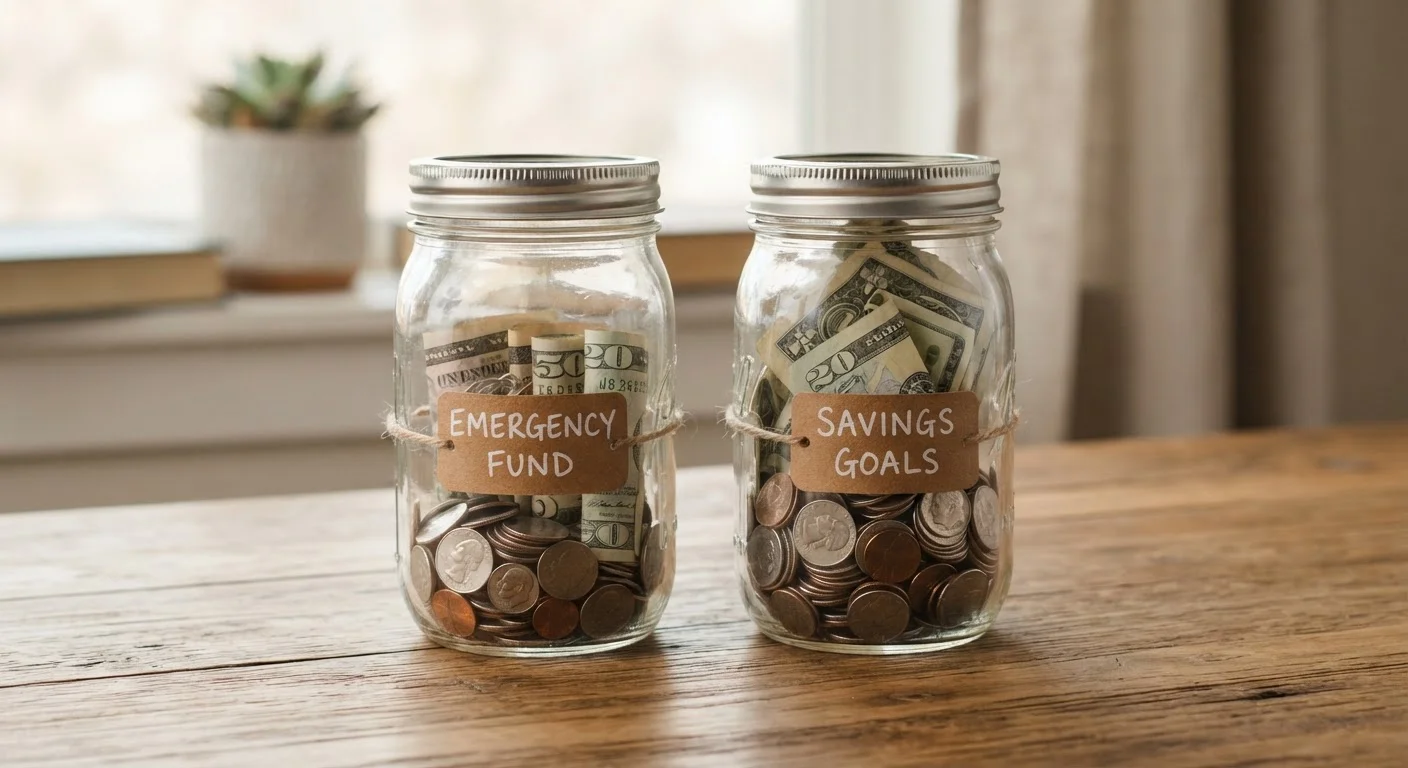
Emergency Fund
The financial firewall - built for life's unexpected disruptions.
Best for: Anyone who wants a dedicated buffer against sudden income loss, medical bills, or urgent repairs.
Option B
General Savings
The flexible goal-getter - built for planned purchases and future priorities.
Best for: People working toward specific targets like a vacation, home down payment, or new appliance.
If you have no financial cushion and face unpredictable expenses
Emergency Fund
Building a dedicated emergency fund first gives you a foundation that prevents debt when the unexpected hits. Without it, unplanned costs typically go on credit cards at high interest.
If your emergency fund is fully funded and you have a specific financial goal
General Savings
Once your safety net is in place, directing extra dollars toward a named goal - travel, home improvements, or a vehicle - keeps your money purposeful and measurable.
If your income is irregular or unpredictable
Emergency Fund
Variable earners benefit most from a larger, accessible emergency buffer that covers lean months without disrupting other financial goals.
If you want to build financial momentum without choosing one over the other
Emergency Fund
Start with a small emergency fund target (such as one month of expenses), then split contributions between topping it up and a general savings goal once the baseline is reached.
Why the Distinction Matters
Lumping all your savings into one account feels simple - until you dip into it for a vacation and then get hit with a car repair you can't cover. The core difference between an emergency fund and general savings isn't just semantic; it's structural. Each serves a different financial job, and mixing them together tends to undermine both.
An emergency fund is a non-negotiable reserve for unplanned, urgent needs: a sudden medical bill, an unexpected job loss, or a critical home repair. It's money you hope never to touch, but absolutely need when life veers off course.
General savings, by contrast, are intentional and goal-driven. You're accumulating money toward something you want or plan to buy - a trip, a new appliance, a down payment. These withdrawals are expected and timed, not reactive.
Understanding this split is foundational to sound financial planning. If you're new to building any savings habit at all, see our practical starting-point guide for accessible first steps.
| Criterion | Emergency Fund | General Savings |
|---|---|---|
| Purpose | Covers unexpected, urgent expenses | Funds planned goals and purchases |
| Withdrawal trigger | Unplanned emergencies only | When goal target is reached |
| Target amount | 3-6 months of essential expenses | Determined by specific goal |
| Liquidity requirement | Must be immediately accessible | Accessible, but some delay tolerable |
| Account type | High-yield or standard savings | High-yield savings or similar |
| Emotional role | Security and stability buffer | Motivation and goal progress |
| Funding priority | Establish a baseline first | Build alongside or after emergency fund |
How Much You Actually Need in Each
For an emergency fund, a widely cited guideline from financial planning educators and consumer protection agencies is three to six months of essential living expenses - think rent or mortgage, utilities, groceries, minimum debt payments, and insurance. The right target for you depends on job stability, household income sources, and whether you have dependents.
~57%
Americans with less than $1,000 in savings
A recurring finding across multiple consumer financial surveys suggests that more than half of U.S. adults have insufficient liquid savings to cover a moderate unexpected expense.
3-6 months
Recommended emergency fund coverage
Consumer financial educators and agencies such as the Consumer Financial Protection Bureau commonly recommend this range as a baseline emergency fund target.
$400
Common benchmark for financial fragility
Federal Reserve research has used an unexpected $400 expense as a measure of financial fragility, with many households reporting difficulty covering this amount without borrowing.
Single-income households, freelancers, and gig workers generally benefit from leaning toward the higher end of that range. For guidance tailored to irregular earners, our article on savings strategies for variable income covers practical approaches.
For general savings, the amount is entirely goal-specific. A travel fund might need $2,000; a home down payment could require $40,000. Set a target, calculate a monthly contribution, and work backward to a timeline. Vague savings goals tend to stall - named, numbered goals are far more likely to be reached.
Where to Keep Each Fund
Both funds should be liquid - easily accessible without penalties or delays. But liquidity is non-negotiable for your emergency fund, which needs to be available within one to two business days at most. A high-yield savings account at a bank or credit union typically meets this requirement while earning more than a standard passbook account.
For general savings, you have slightly more flexibility if your goal timeline is longer. A high-yield savings account vs. a traditional account is worth understanding before you choose where to park goal-oriented money - the interest differential can meaningfully accelerate your progress over time.
The strategic move: keep your emergency fund and each savings goal in separate, labeled accounts. Many banks allow you to open multiple savings accounts and name them (e.g., "Emergency Fund," "Travel 2026," "New Laptop"). Separation reduces psychological friction - you're less likely to raid a fund when it's clearly designated for something else.
Automation makes both strategies easier to maintain. Our guide to automating your savings walks through how to structure recurring transfers so contributions happen without relying on willpower each month.
Avoid Keeping Emergency Funds in Investment Accounts
Money market funds, brokerage accounts, or certificates of deposit (CDs) with early-withdrawal penalties are not ideal for emergency funds. Market fluctuations or withdrawal restrictions could mean your money isn't accessible - or is worth less - precisely when you need it most. Stick to FDIC-insured deposit accounts for your emergency reserve.
Building Both Without Sacrificing Your Budget
Many people delay general savings until their emergency fund is fully stocked - but that approach can take years and leave other goals stagnant. A more practical method: split contributions. If you can set aside $300 per month, direct $200 toward your emergency fund until it hits your target, then redirect that $200 toward a savings goal once the buffer is built.
Review your monthly budget to identify where these contributions can come from without creating hardship. Even modest, consistent contributions compound over time - the discipline matters more than the dollar amount in the early stages.
If you're saving for something with a clear date - like a trip - our travel fund strategies guide can help you reverse-engineer a monthly target from your goal amount and timeline.
This article is for general informational and educational purposes only and does not constitute personalized financial advice. Consult a licensed financial professional for guidance specific to your situation.