

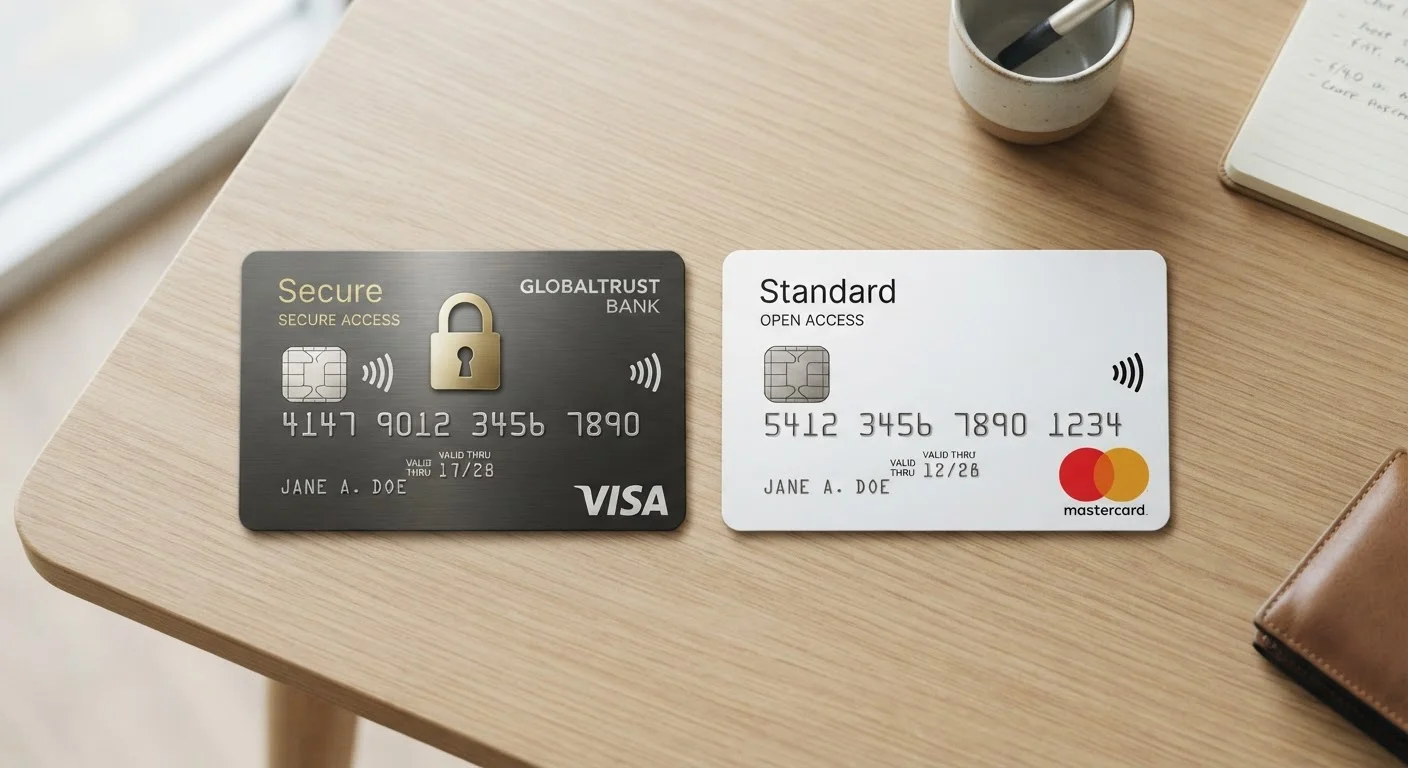
Key Takeaways
Option A
Secured Credit Card
The collateral-backed tool for building or rebuilding credit.
Best for: People with no credit history or damaged credit who need a structured, low-risk entry point into the credit system.
Option B
Unsecured Credit Card
The standard credit card with no upfront deposit required.
Best for: Consumers with an established credit history who qualify based on their creditworthiness alone.
If you have no credit history and are starting from scratch
Secured Credit Card
A secured card gives you access to credit when lenders have no history to evaluate. Consistent, on-time payments build the record you need to qualify for unsecured products later.
If you have damaged credit and need to rebuild
Secured Credit Card
Secured cards are more accessible after credit setbacks because the deposit limits the lender's risk. They give you a structured path back to stronger standing without requiring approval based on a low score.
If you have an established credit history and want everyday flexibility
Unsecured Credit Card
Unsecured cards don't tie up your cash in a deposit, and they typically offer higher limits and lower fees - a better fit once your credit profile can support approval.
If you're managing tight cash flow and can't spare a deposit
Unsecured Credit Card
If your credit qualifies, an unsecured card avoids locking up funds. Just be mindful that higher available credit also requires disciplined spending habits to avoid growing debt.
The Fundamental Difference: Collateral
At the core, the secured vs. unsecured distinction is about risk - specifically, who bears it. A secured credit card requires you to deposit cash with the issuer before you can use the card. That deposit acts as collateral and usually sets your credit limit. If you deposit $300, your limit is typically $300. This arrangement protects the lender: if you stop paying, they keep the deposit.
An unsecured credit card extends credit with no deposit required. The lender approves you based on your credit history, income, and other financial signals, then sets a limit based on how creditworthy they judge you to be. The lender takes on real risk here, which is why people with thin or damaged credit profiles often don't qualify.
For a plain-language reference on terms like credit limit, collateral, and hard inquiry, see Key Terms Every Debt and Credit Conversation Relies On.
| Criterion | Secured Credit Card | Unsecured Credit Card |
|---|---|---|
| Upfront deposit | Required (sets credit limit) | Not required |
| Approval criteria | Accessible with poor or no credit | Based on creditworthiness |
| Typical credit limit | Often $200-$500 | Varies widely; generally higher |
| Annual fees | Common; often higher relative to limit | Varies; many fee-free options exist |
| Interest rates (APR) | Typically higher | Range is broad; can be lower |
| Bureau reporting | Most report; verify before opening | Standard; most issuers report |
| Upgrade path | Often upgradeable after 12-18 months | N/A - already unsecured |
How Each Card Affects Your Credit
Both secured and unsecured cards can report your payment activity to the three major credit bureaus - Equifax, Experian, and TransUnion - though you should confirm that any card you're considering actually does this before opening an account. That reporting is what makes either type useful for building credit history.
Payment history is the single largest factor in most credit scoring models, accounting for roughly 35% of a FICO score. Whether your card required a deposit or not, paying on time every month is what moves your score in the right direction. Missing payments on a secured card can still damage your credit just as much as missing them on an unsecured one.
Another factor worth watching is credit utilization - the share of your available credit you're using at any given time. Because secured cards often come with low limits (frequently $200-$500), even modest spending can push your utilization percentage high. Keeping balances well below your limit matters. Credit utilization has an outsized effect on scores - and that effect is amplified when your limit is small.
35%
Share of FICO score from payment history
According to FICO, payment history is the single largest component in most standard credit scoring models.
~45M
Americans with no scorable credit file
The Consumer Financial Protection Bureau (CFPB) has estimated that tens of millions of U.S. adults are credit invisible or have unscorable files, making secured cards a relevant entry point.
30%
Utilization threshold commonly cited by experts
Credit counselors and scoring analysts generally recommend keeping your credit utilization below 30% - a threshold that can be easily exceeded on a low-limit secured card.
Costs, Fees, and the Upgrade Path
Secured cards tend to carry higher annual fees relative to their benefits, sometimes including application or processing fees on top of the annual charge. Since these products serve higher-risk applicants, issuers price that risk into the product. Interest rates (APR) on secured cards are also typically on the higher end, making it especially important to pay your balance in full each month - carrying a balance at a high rate erodes any credit-building progress you're making.
Unsecured cards span a wide spectrum: some carry no annual fee, others charge substantial ones in exchange for rewards or perks. The key is matching the card's cost structure to how you'll actually use it.
One important milestone for secured cardholders: many issuers will review your account after 12-18 months of responsible use and either upgrade you to an unsecured product or return your deposit while converting the account. This transition is worth asking about directly when evaluating a secured card - it's a sign the card is designed as a stepping stone, not a permanent tier.
If you're wondering what else shapes your credit profile along the way, common credit myths can send you in the wrong direction - including some widely repeated beliefs that may be slowing your progress.
If you're starting with no credit history at all, there are practical paths to establishing a record beyond just secured cards.
This article is for general informational and educational purposes only and does not constitute personalised financial advice. Consult a qualified financial professional for guidance specific to your situation.