

Key Takeaways
Credit Score
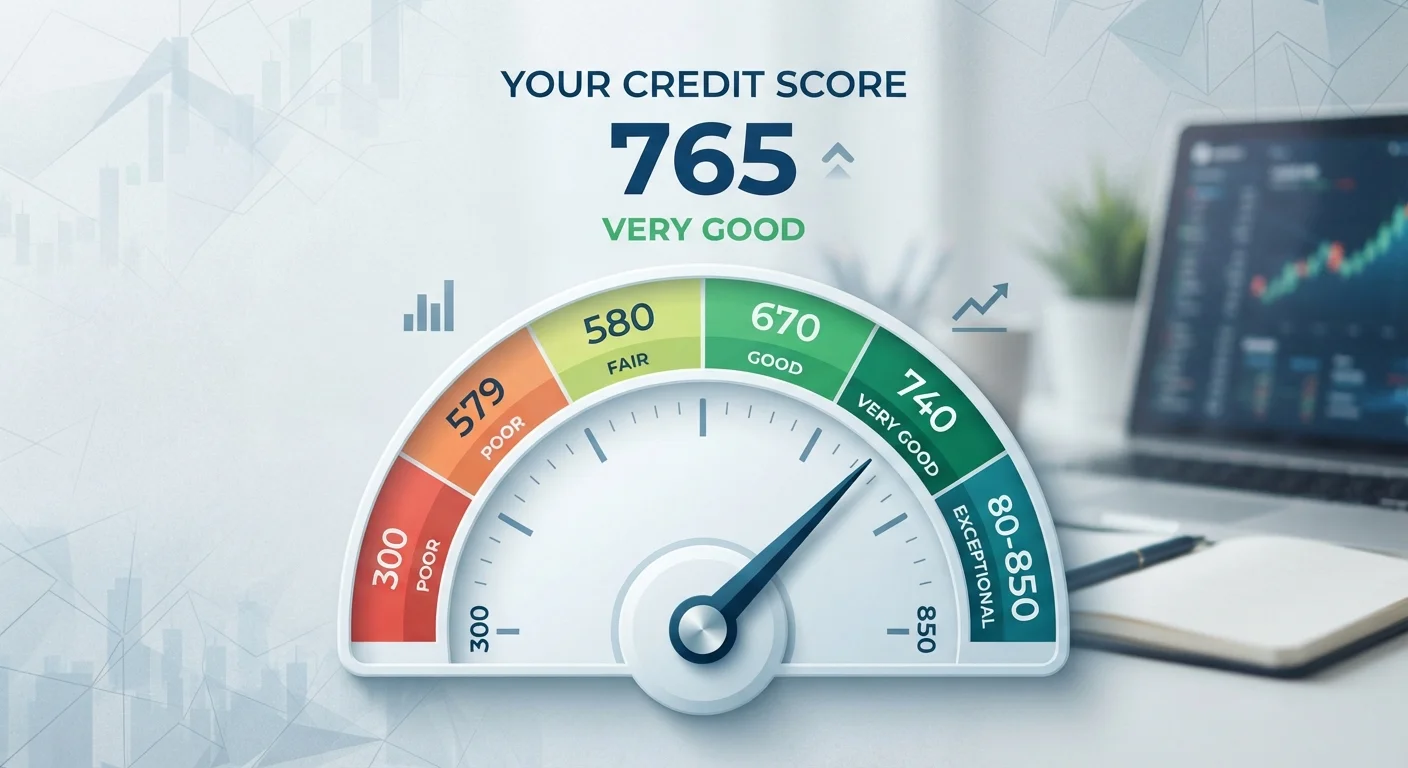
A credit score is a three-digit number - typically ranging from 300 to 850 - that summarizes how reliably you've managed borrowed money. Lenders use it to estimate how likely you are to repay a new debt on time. The higher the score, the lower the perceived risk to a lender.
The most widely used scoring model is FICO®, developed by Fair Isaac Corporation. VantageScore is another common model. Both use similar inputs but weight them differently, so scores can vary across models and bureaus.
What a Credit Score Actually Represents
A credit score isn't a measure of wealth, income, or financial intelligence. It's a statistical prediction - specifically, the likelihood that you'll fall 90 or more days behind on a debt within the next 24 months. Lenders feed your credit history into a scoring model, and the output is a number that proxies for risk.
This distinction matters. A person earning a high income with no credit history may score lower than a moderate earner who has responsibly managed credit cards and loans for a decade. The score reflects behavior, not means.
Because scores influence the interest rate you're offered - and sometimes whether you're approved at all - understanding the mechanics puts you in a stronger negotiating position. It's also worth knowing that your score is not a single fixed number: it's recalculated each time a lender requests it, based on what's in your credit report at that moment.
35%
Weight of payment history in a FICO score
According to FICO's published scoring model breakdown, on-time payments are the single most influential factor in your credit score.
~49%
Share of Americans with a FICO score of 750 or above
FICO has reported that roughly half of U.S. consumers score in the 'very good' to 'exceptional' ranges, though distribution shifts with economic conditions.
300-850
Full range of FICO credit scores
Scores at the lower end indicate higher risk to lenders, while scores near 850 represent the most favorable borrower profile under the FICO model.
The Five Factors That Build Your Score
FICO, the dominant scoring model in the U.S., breaks your score into five weighted categories:
- Payment history (35%): Whether you've paid bills on time is the most influential factor. Even one 30-day late payment can noticeably lower a score.
- Credit utilization (30%): This is the ratio of your current revolving balances to your total available credit limits. Using a smaller percentage of available credit generally supports a higher score. Many financial educators suggest keeping utilization below 30%, though lower is typically better.
- Length of credit history (15%): Older accounts in good standing benefit your score. This includes the age of your oldest account, your newest account, and the average age of all accounts.
- Credit mix (10%): Having a variety of credit types - revolving credit like cards, and installment loans like auto or student loans - can modestly benefit your score.
- New credit inquiries (10%): When a lender pulls your credit to evaluate an application (a "hard inquiry"), it can temporarily lower your score by a few points. Multiple hard inquiries in a short window for the same loan type - mortgage shopping, for example - are typically grouped together and treated as a single inquiry.
These percentages are guidelines, not exact formulas. The weight of each factor shifts based on the depth of your overall credit profile. Someone with a thin file may see utilization matter more than length of history.
Keep Utilization Low Before Applying
If you're planning to apply for a loan or credit card, consider paying down revolving balances first. Since utilization is calculated at the moment a lender pulls your report, reducing it in the weeks before an application can produce a meaningful score improvement. Aim to use less than 30% of each card's limit, and lower if possible.
Why the Number Follows You Into Major Decisions
Lenders aren't the only ones who use credit scores. Landlords frequently pull credit reports when screening tenants. Some employers check credit as part of background reviews for positions involving financial responsibility (though this practice is regulated differently by state). Utility companies may use credit to determine deposit requirements.
The financial stakes are most visible with borrowing. On a large loan like a mortgage, even a modest difference in interest rate - driven by a score difference of 60 or 80 points - can translate to thousands of dollars in additional interest paid over the life of the loan. This is why building and protecting a strong credit foundation has tangible, long-term value.
Your credit report is the raw material behind the score. Errors in that report - an account that isn't yours, a payment recorded as late when it wasn't - can silently drag your score down. Regularly reviewing your report for inaccuracies is one of the most concrete steps you can take. The credit report audit guide outlines exactly what to look for before any major application.
It's also worth knowing that lenders assess more than just your score. Your debt-to-income ratio - the share of your gross monthly income that goes toward existing debt payments - is evaluated alongside your score, especially for mortgages and large personal loans.
Common Misconceptions That Can Cost You
Misunderstanding how scores work leads to behaviors that backfire. Closing unused credit cards, for instance, seems tidy - but it reduces available credit and can raise your utilization ratio, potentially lowering your score. Avoiding credit entirely also doesn't build the history lenders want to see.
Perhaps the most durable myth is that checking your own score hurts it. It doesn't. Reviewing your own credit is a "soft inquiry" and has no effect on your score. Only hard inquiries - triggered by a lender's credit pull when you apply for new credit - carry a temporary, minor impact.
For a more detailed look at what the evidence actually shows versus common belief, the credit score myths guide covers the most persistent misconceptions. And if you're managing credit over the long term, it's worth understanding the everyday habits that erode your score - many of them are easy to overlook precisely because they build slowly.
This article is for general informational and educational purposes only and does not constitute personalized financial or credit advice. Consult a qualified financial professional for guidance specific to your situation.