

Key Takeaways
What Primer Actually Does
Primer is not simply a thin, cheap version of paint. It is a chemically distinct product formulated to bond with raw or previously finished surfaces and create a uniform base for topcoats. Its primary jobs are adhesion, sealing, and stain blocking - none of which standard paint is engineered to perform reliably on its own.
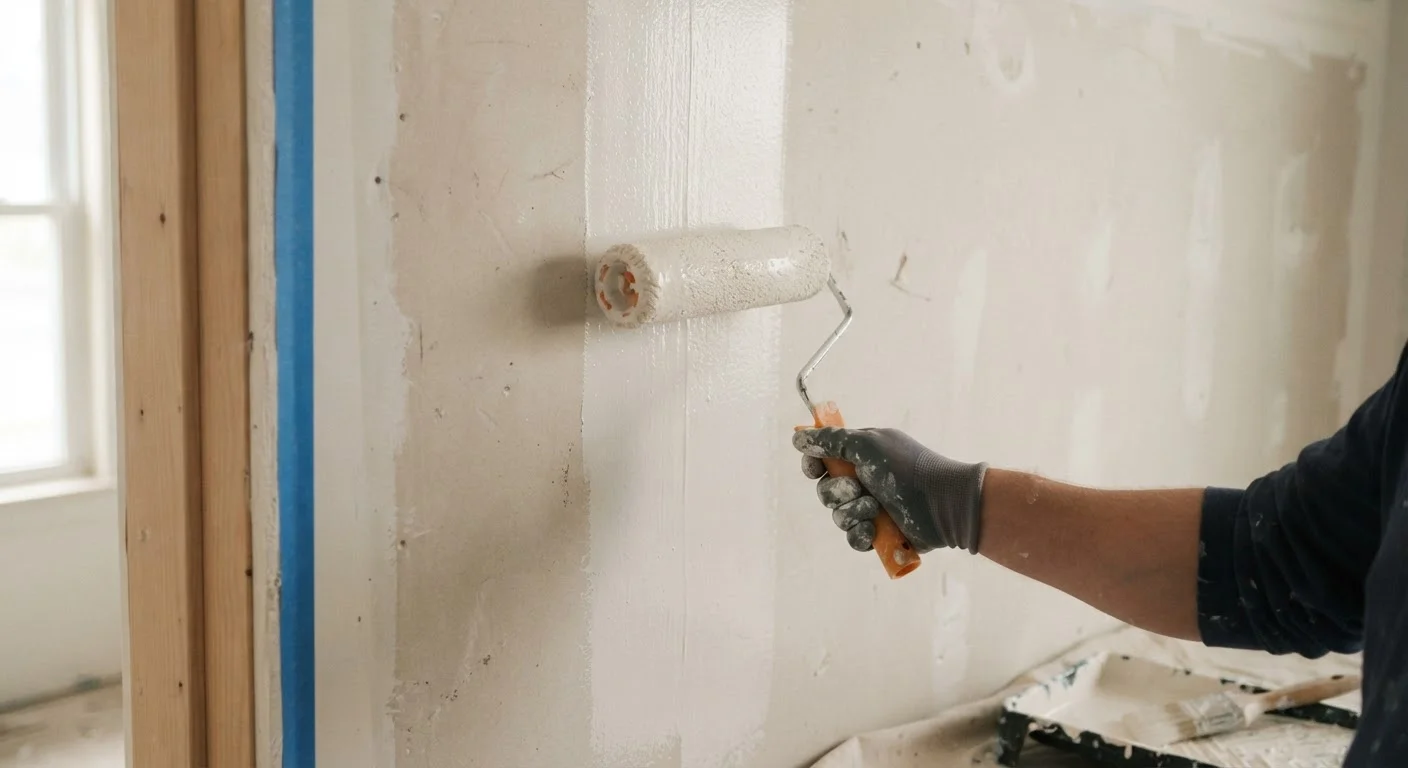
On bare drywall, for example, the paper facing is highly absorbent. Without primer, paint soaks in unevenly, producing a blotchy finish called flashing - patches where the sheen looks different depending on your angle of view. Primer saturates those pores so that paint sits on top rather than being swallowed by the substrate.
On bare wood, primer prevents tannins - natural compounds in species like cedar, redwood, and pine - from bleeding through and discoloring the finish coat. On previously painted surfaces with stains from water damage, smoke, or grease, a shellac- or oil-based stain-blocking primer creates a barrier that latex paint alone cannot.
Myth
Paint labeled 'paint and primer in one' means I can skip the primer step entirely.
Fact
These combination products add primer-like resins to paint, but they do not replace a dedicated primer on bare, porous, or stained surfaces.
Paint-and-primer products perform adequately when repainting a previously painted wall that is clean, sound, and similar in color. On bare drywall, new wood, or surfaces with stains, they lack the sealing and penetrating properties of a true primer. Independent testing by professional painting organizations consistently finds that dedicated primer followed by topcoat outperforms combination products on challenging substrates. The convenience marketing is real; the chemistry has limits.
Myth
Applying extra coats of paint is just as effective as using primer first.
Fact
Additional topcoat layers do not replicate the adhesion and sealing functions of primer, and they cost more in material and labor.
Paint is formulated to look good and protect a surface - not to bond aggressively to raw substrates. Stacking coats on unprimed drywall or wood can still result in flashing, poor adhesion, and premature peeling because each layer is competing with the same absorption problem. You end up spending more on paint while achieving a shorter-lasting result than a single primer coat plus two topcoats would have provided.
Myth
If I'm painting a dark color over a light wall, primer is unnecessary because the dark paint will cover it.
Fact
Coverage and adhesion are separate concerns; a dark color can cover visually but still peel or flash if the surface was not properly primed.
Color coverage is about pigment concentration, while adhesion is about molecular bonding between the paint film and the substrate. A dark, high-pigment paint may hide the previous color in one or two coats, but if the wall has repaired patches, old stains, or areas where the existing paint is chalking or marginally bonded, those problems will eventually telegraph through - or the new paint will begin to fail at those spots. Tinted primer is an efficient solution: it reduces the number of topcoats needed while still providing the adhesion benefits.
Myth
Primer is only necessary for brand-new construction - not for repainting.
Fact
Several repainting scenarios strongly warrant primer, including significant color changes, repaired drywall, stained walls, and glossy existing surfaces.
Freshly skim-coated or patched areas absorb paint differently than the surrounding wall, making spot-priming at minimum a practical necessity for a uniform finish. Glossy surfaces - whether from semi-gloss trim paint or tile - need a bonding primer for new paint to adhere. And if the existing paint is chalking, flaking, or was applied over a surface that was never properly sealed, adding new paint without primer simply layers a fresh problem on top of an old one.
Common Primer Myths - Corrected
Many homeowners skip primer based on advice that sounds reasonable but does not hold up in practice. Understanding where these beliefs go wrong can save a significant amount of rework.
Don't Skip Primer After Drywall Repairs
Patched or skim-coated areas absorb paint at a different rate than the surrounding wall surface, almost always resulting in visible dull spots - a problem called flashing - even under multiple topcoats. Spot-priming every repair with a PVA or all-purpose primer before applying finish paint is a basic step that professional painters consistently follow. Skipping it is one of the most common causes of callbacks and repaints in residential painting work.
Choosing the Right Primer for Your Surface
Not all primers are interchangeable. Using the wrong type can be nearly as counterproductive as using none at all.
- Drywall primer (PVA): Polyvinyl acetate primers are specifically designed for new or repaired drywall. They seal the paper surface efficiently and are generally water-based and low-odor.
- Oil-based primer: Well suited for bare wood, metal, and heavily stained surfaces. Oil-based formulas penetrate deeply and block tannins and stains more effectively than most water-based options, though they require mineral spirits for cleanup and have higher VOC (volatile organic compound) content.
- Shellac-based primer: The most aggressive stain blocker available to consumers. Effective against smoke, severe water stains, and odors. Dries fast but requires denatured alcohol for cleanup.
- Bonding primer: Formulated to adhere to slick or glossy surfaces - such as tile, glass, or previously painted surfaces in good condition - where standard primers may not grip well.
When in doubt, read the primer label's list of recommended substrates rather than relying on product marketing language. Manufacturers are required to specify what their products are tested for.
2-3×
Longer paint adhesion life with proper priming
Professional painting trade sources commonly cite that properly primed surfaces can double or triple the functional lifespan of a topcoat compared to unprimed surfaces in similar conditions.
~30%
Reduction in topcoat layers needed on bare drywall
Industry guidance from drywall manufacturers generally indicates that PVA primer allows finish coverage in fewer topcoat applications compared to painting directly onto bare drywall paper.