

Key Takeaways
Paint Finish (Sheen Level)
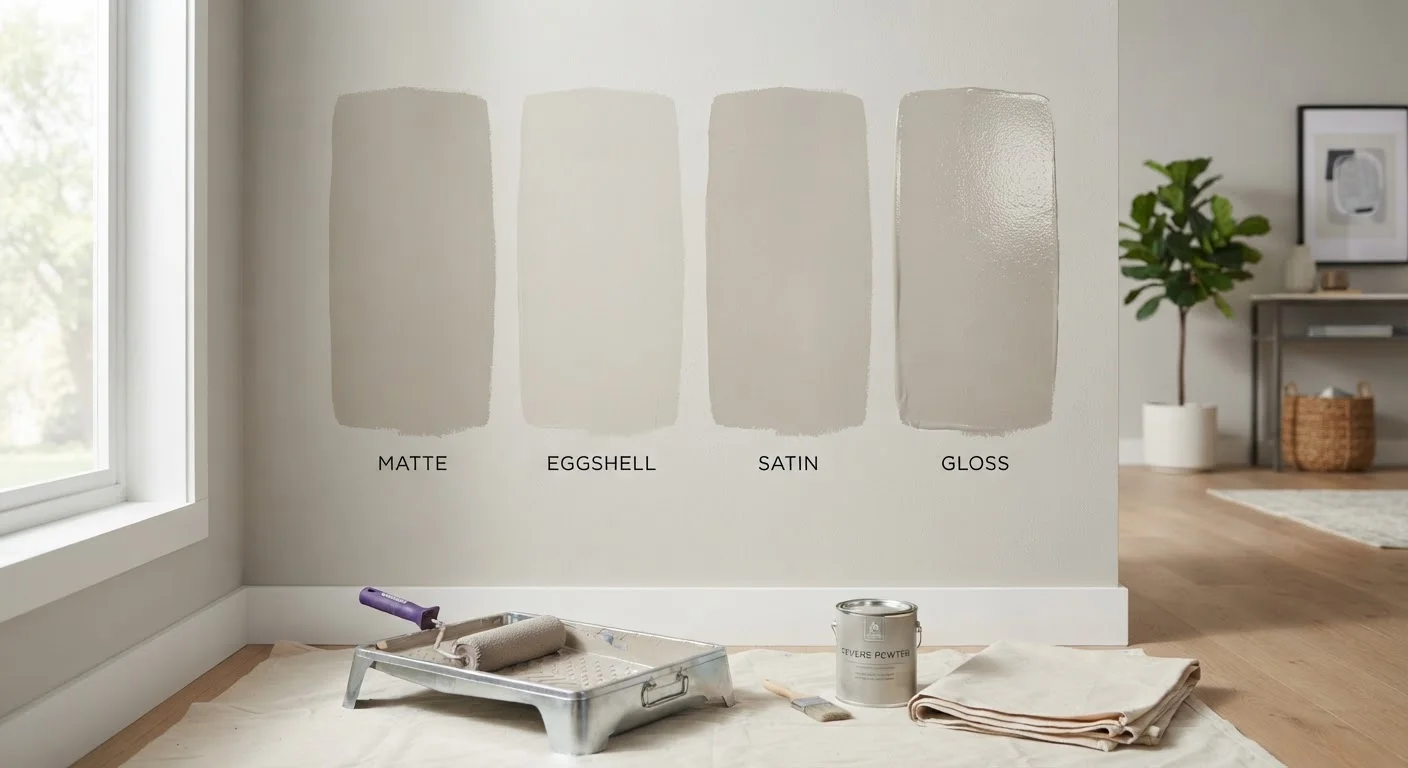
A paint finish refers to how much light a dried paint surface reflects - commonly called its sheen level. From matte (no shine) to high-gloss (mirror-like), each finish behaves differently in terms of durability, washability, and how it affects a room's appearance. Choosing the wrong finish can make a surface look rough or make a space feel smaller than it is.
Sheen is measured by the amount of light reflected at a 60-degree angle (gloss units). Higher gloss units indicate a shinier, more durable surface with greater moisture resistance.
Why Paint Finish Matters as Much as Color
When most homeowners plan a paint project, color gets nearly all the attention. But the finish - how shiny or flat the final surface looks - has just as much impact on a room's appearance and how long the paint job holds up. A beautiful color in the wrong finish can make a wall look chalky, attract every fingerprint, or wear out within a year of regular use.
Understanding what each sheen level does before you buy saves both money and the frustration of repainting. Whether you're refreshing a bedroom, tackling a kitchen, or updating trim throughout the house, matching finish to function is the most practical decision you'll make.
4-5
Common interior paint sheen levels
Most paint manufacturers categorize interior finishes into flat/matte, eggshell, satin, semi-gloss, and high-gloss - each with distinct performance properties.
60°
Angle used to measure paint gloss
Industry standard gloss measurement uses a 60-degree angle reflectometer; higher gloss unit readings indicate shinier, more reflective surfaces.
Up to 2x
More washable: gloss vs. flat finishes
Higher-sheen paints generally withstand more cleaning cycles before showing wear, according to general paint durability testing principles from the coatings industry.
Matte and Flat: The Low-Sheen Option
Matte and flat finishes reflect very little light, giving walls a soft, velvety look that many people find warm and inviting. These finishes are especially forgiving on walls with imperfections - small dents, texture variations, and patched spots are less visible because there's no sheen to highlight them.
The trade-off is cleanability. Flat paint absorbs rather than repels moisture, so scrubbing can damage the surface and leave dull patches. These finishes work best in:
- Adult bedrooms
- Formal dining rooms
- Ceilings (flat is nearly universal here)
- Low-traffic spaces where walls rarely need washing
If your household includes young children or pets, matte walls in high-touch areas will likely require more frequent touch-ups.
Eggshell and Satin: The Middle-Ground Finishes
Eggshell has a very slight sheen - similar to the surface of an eggshell - that gives walls a bit of depth without looking shiny. It's more washable than flat paint and holds up reasonably well in everyday living areas. For most homeowners, eggshell is the practical default for main living spaces: living rooms, bedrooms, and dining rooms all respond well to it.
Satin is one step up in sheen and durability. It has a pearl-like quality that reflects light gently, and it cleans up easily with a damp cloth. Satin is a strong choice for:
- Kitchens and bathrooms
- Hallways and entryways
- Children's rooms
- Laundry rooms
The slightly higher sheen of satin does begin to show surface imperfections more than eggshell, so good prep and priming help significantly.
Test Before You Commit
Paint a large sample patch - at least 12 by 12 inches - in your chosen color and finish, and observe it at different times of day under natural and artificial light. Sheen level interacts with lighting in ways that a small chip or a screen image cannot accurately predict. This simple step can save you from a costly repaint.
Semi-Gloss and Gloss: For Durability and Detail
Semi-gloss is highly washable and resists moisture well, which is why it's a standard choice for trim, baseboards, window casings, and doors. It reflects noticeably more light than satin and creates a clean contrast against eggshell or matte walls - a classic interior look that also makes architectural details stand out.
High-gloss is the most reflective and durable option available. It's used most often on cabinetry and furniture-grade surfaces where a hard, wipeable finish is essential. High-gloss on walls is less common in residential settings because it amplifies every surface flaw, but some homeowners use it as an intentional design statement in specific rooms.
Because gloss finishes highlight imperfections, surface preparation - filling holes, sanding, and priming - matters more as sheen increases. Skipping prep with a high-gloss paint will make flaws more visible, not less.
When you're updating multiple rooms, coordinating paint finish choices is part of the broader home organization picture - much like finding systems that work for everyone in the household. For more on balancing practicality and personal preference at home, see our guide to organizing shared spaces.
Choosing the Right Finish: A Practical Room-by-Room Guide
There's no universal answer, but the following general framework reflects common practice among professional painters and is a reliable starting point for most homes:
| Room or Surface | Recommended Finish |
|---|---|
| Ceilings | Flat / Matte |
| Bedrooms | Matte or Eggshell |
| Living and Dining Rooms | Eggshell |
| Kitchens and Bathrooms | Satin or Semi-Gloss |
| Hallways and High-Traffic Areas | Satin |
| Trim, Doors, and Baseboards | Semi-Gloss or Gloss |
| Cabinetry | Semi-Gloss or High-Gloss |
Keep in mind that paint formulations vary by manufacturer, and some brands offer specialty finishes - such as scrubbable matte - that blur traditional sheen categories. Reading the product data sheet before purchasing helps confirm a finish's actual performance properties rather than relying on the sheen label alone.