

Key Takeaways
Why the Nutrition Label Exists - and What It Can't Tell You
The Nutrition Facts label is a federally standardized tool required on most packaged foods sold in the United States. The FDA oversees its format, and the current design - updated in 2016 and phased in by 2020 - was revised to better reflect how people actually eat and to highlight nutrients most relevant to public health today.
What the label does well: it gives you consistent, comparable data across products in a standard format. What it can't do: reflect your individual nutritional needs, account for how a food fits into your whole diet, or tell you whether a food is inherently «good» or «bad.» For that broader context, the full picture of nutrition from labels to dietary patterns is worth exploring.
Labels are also only one signal. A granola bar with a tidy label can still be high in added sugar; a whole food like a banana has no label at all yet is nutritionally valuable. Keep that perspective as you work through reading individual labels.
Labels Inform - They Don't Diagnose
Nutrition labels are general educational tools, not personalised health prescriptions. Individual nutrient needs vary based on age, health status, activity level, and medical conditions. Always consult a qualified healthcare professional or registered dietitian before making significant dietary changes, especially if you have a chronic condition or are pregnant.
What You Need Before You Start
No special equipment is needed - just a packaged food item and a few minutes. If you're practicing for grocery shopping, bringing a notepad helps when comparing multiple similar products side by side.
What you will need
Packaged food product
Provides the Nutrition Facts label you will practice reading.
Pen and notepad (or phone notes app)
Useful for jotting down key numbers when comparing multiple products.
Once you have a label in hand, work through the steps below in order. The label's layout is designed to be read top to bottom, and the sequence below follows that logic.
Step-by-Step: How to Read a Nutrition Label
Start With the Serving Size
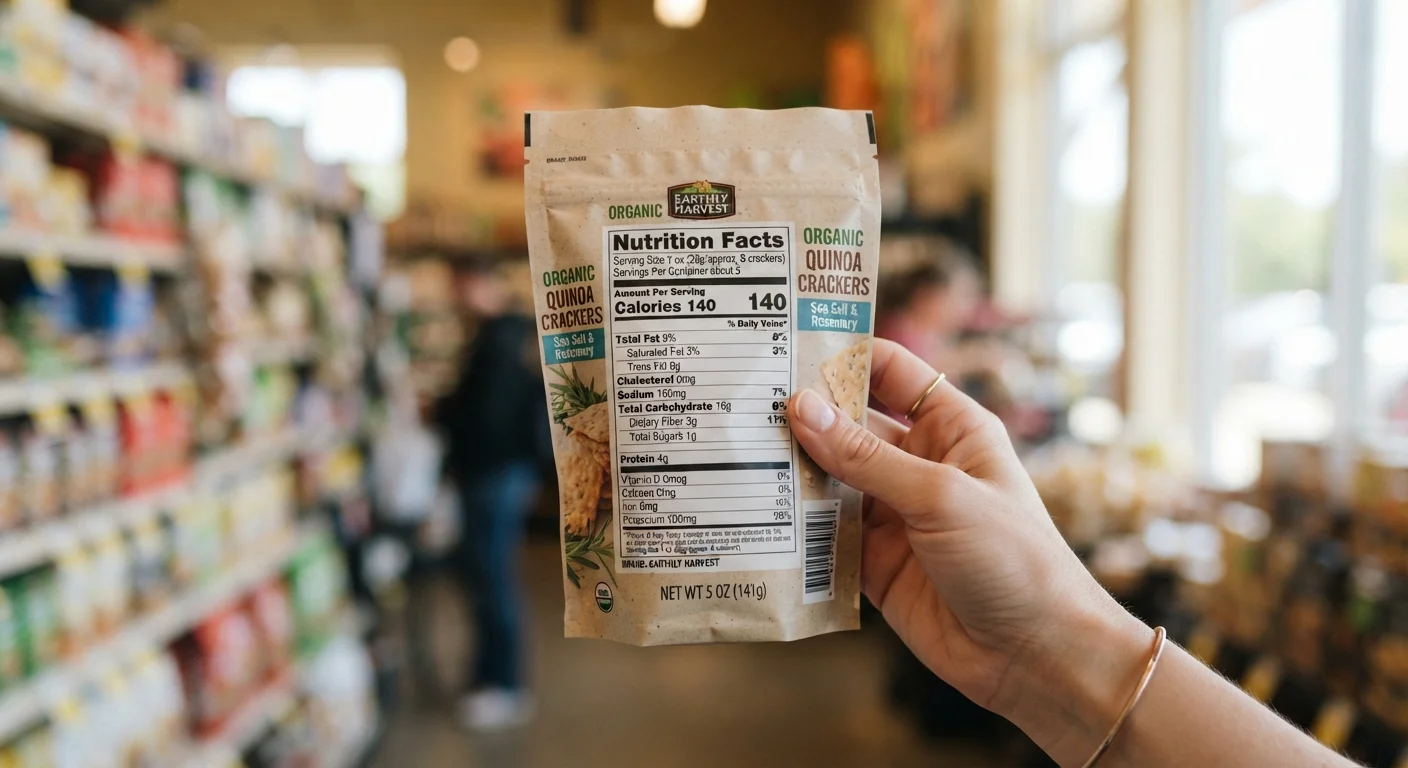
The serving size sits at the very top of the label for a reason - every other number is based on it. It tells you the amount of food the manufacturer used to calculate all the values below. Serving sizes are standardized by the FDA and are meant to reflect how much people typically eat in one sitting, though this may not match your actual portion.
Check whether the package contains one serving or multiple. The servings per container line tells you this. If a bag of chips shows 150 calories but contains three servings, eating the whole bag means consuming 450 calories.
Read the Calories in Context
Calories measure the total energy a serving provides. The large, bold calorie number is prominent by design. While calorie needs differ significantly by person, general dietary guidance in the U.S. is built around a 2,000-calorie reference diet - which is why % Daily Values use that benchmark.
Rather than fixating on calories alone, use them as one data point alongside the nutrients listed below. A food can be high in calories yet rich in fiber and protein, or low in calories but heavily processed with minimal nutritional value.
Identify Nutrients to Limit
The label groups certain nutrients under scrutiny because most Americans tend to consume them in excess. Look for:
- Saturated fat - associated with cardiovascular health considerations when consumed in high amounts
- Sodium - present in far larger quantities than many people realize, especially in processed and packaged foods
- Added sugars - listed separately from total sugars since the late 2010s FDA update; these are sugars introduced during processing, not those naturally present in fruit or dairy
For a deeper look at the sugar distinction, see how added and natural sugars differ.
Seek Out Nutrients to Prioritize
Below the nutrients-to-limit section, you'll find nutrients many Americans fall short on. These include:
- Dietary fiber - supports digestive health and satiety; most U.S. adults consume well under recommended amounts (see why fiber shortfalls are so common)
- Protein - supports muscle maintenance, immune function, and satiety
- Vitamin D, calcium, iron, and potassium - listed because they're commonly under-consumed in the general population
Choosing foods with higher % Daily Values for these nutrients is a straightforward way to fill common gaps.
Decode the % Daily Value Column
The % Daily Value (%DV) column, on the right side of the label, shows what percentage of a nutrient's daily reference amount one serving provides - based on a 2,000-calorie diet. It's a practical comparison tool that works across different nutrients without requiring you to memorize specific gram targets.
This column answers one question quickly: is this food a significant source of this nutrient, or barely a blip?
Scan the Ingredients List
Ingredients are listed in descending order by weight - whatever appears first makes up the largest proportion of the product. If added sugar (under any of its many names: cane juice, dextrose, corn syrup, maltose, etc.) appears among the first three ingredients, the product is likely sugar-heavy. Similarly, whole grains listed first in a bread product signal a more nutritious base than enriched flour.
The ingredients list reveals what's actually in the food, while the Nutrition Facts panel only shows amounts. Both together give you a fuller picture.
Watch for Multi-Serving Packages
Many snack bags, bottled drinks, and small containers actually contain two or more servings. If you consume the whole package, every number on the label must be multiplied accordingly. This is one of the most common sources of unintentional calorie and sodium underestimation.
Use the 5%/20% Rule as a Quick Guide
A % Daily Value of 5% or less generally signals a low amount of that nutrient per serving; 20% or more signals a high amount. Use this shorthand to quickly decide whether a food contributes meaningfully to your daily intake of nutrients you want more of - like fiber - or whether it's heavy in nutrients to moderate, like sodium.
Putting It All Together at the Store
Reading one label is a skill; using labels consistently across your grocery trip is a habit. A few practical approaches help make it stick:
- Compare like for like. When choosing between two varieties of the same product, align on serving size first, then compare sodium, fiber, and added sugars.
- Don't let one nutrient decide everything. A food that's higher in sodium might also be your best available source of iron or protein in that category.
- Think in patterns, not single items. Nutrition science consistently shows that overall dietary patterns - not individual foods - have the strongest association with health outcomes. See common pitfalls in how we think about food for more on this.
Once you're comfortable reading labels, the next step is applying that knowledge to how you structure meals overall. Building a balanced plate offers a practical starting point for translating label literacy into everyday eating. You might also find the weekly grocery list audit useful for putting label reading into a broader shopping routine.
This article is for general informational and educational purposes only and does not constitute medical or dietary advice. Individual nutritional needs vary. Consult a qualified healthcare professional or registered dietitian for guidance specific to your health situation.