

Key Takeaways
Our Verdict
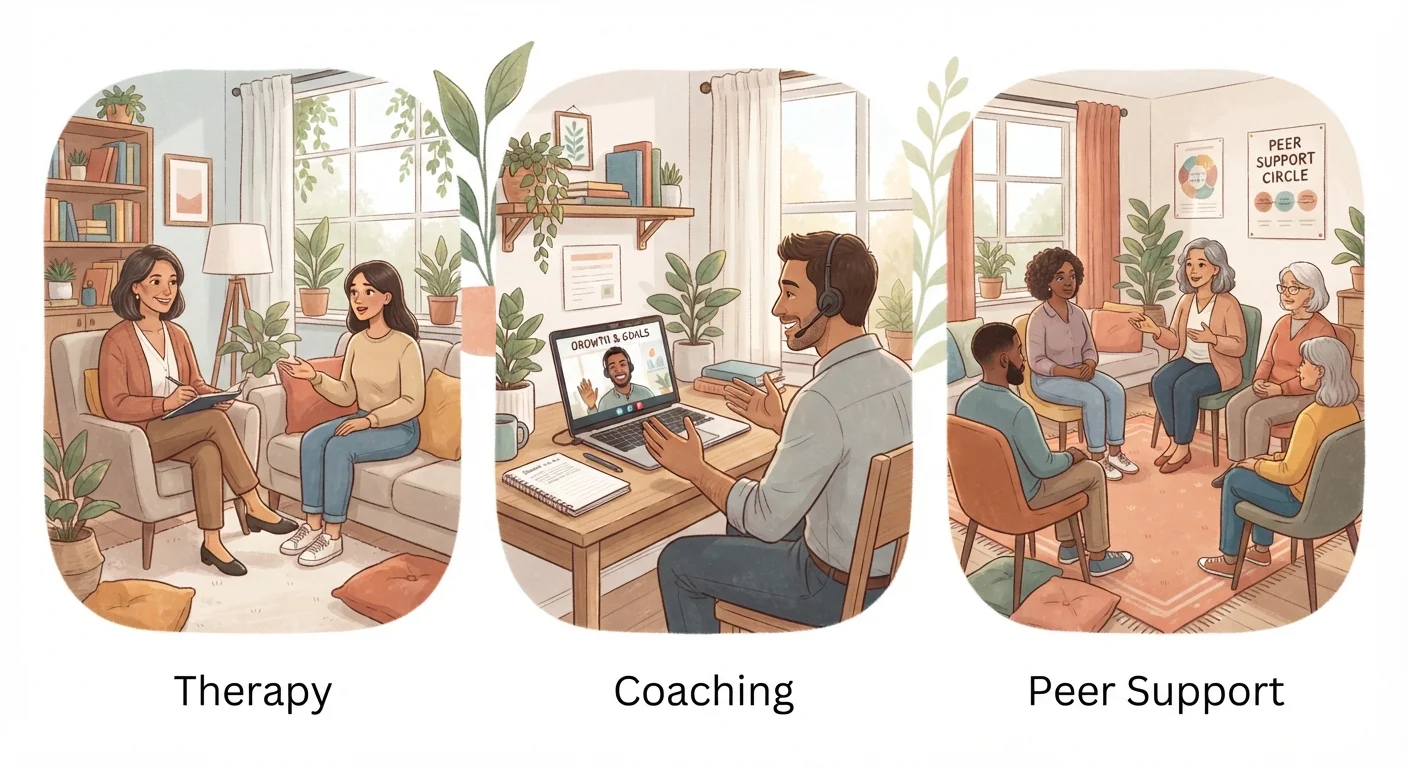
Therapy, coaching, and peer support each fill a distinct role in the mental wellness landscape. No single option is universally superior - the right fit depends on what you're navigating, how much clinical support you need, and the kind of connection you find most helpful.
| Best for | Recommended |
|---|---|
| Those dealing with mental health conditions, trauma, or clinical symptoms | Therapy |
| Those pursuing personal growth, career transitions, or accountability | Coaching |
| Those seeking community, validation, and shared lived experience | Peer Support |
| Those who want layered, ongoing wellness support | A combination of all three |
Why These Three Are Easily Confused
Mental wellness support comes in many forms, and the vocabulary around it can feel murky. Therapy, coaching, and peer support are often mentioned in the same breath - but they operate from different foundations, serve different purposes, and carry different responsibilities. Mixing them up isn't just a semantic issue; it can lead people toward the wrong kind of help at the wrong time.
Understanding each option clearly makes it easier to ask for what you actually need. It also helps dismantle the stigma that still surrounds getting support. As explored in common mental health myths that delay care, misconceptions about what support looks like can quietly stop people from reaching out at all.
| Therapy | Coaching | Peer Support | |
|---|---|---|---|
| Provider background | Licensed mental health clinician | Certified or self-designated coach | Trained peer specialist or community member |
| Regulation | State-licensed and regulated | Largely unregulated in the US | Varies by program or organization |
| Primary focus | Diagnosis, treatment, mental health symptoms | Goals, growth, accountability | Shared experience, community, belonging |
| Suitable for | Clinical symptoms, trauma, disorders | Personal development, life transitions | Isolation, stigma, lived-experience connection |
| Confidentiality | Legally protected and structured | Varies by coach agreement | Varies by group norms |
| Can prescribe or diagnose | Yes (within scope) | No | No |
Therapy: Clinical Support With a Licensed Professional
Therapy - sometimes called psychotherapy or counseling - is delivered by a licensed mental health professional such as a psychologist, licensed clinical social worker (LCSW), or licensed professional counselor (LPC). Licensure means these practitioners have completed advanced education, supervised clinical hours, and passed credentialing exams regulated by their state.
Therapists are trained to assess, diagnose, and treat mental health conditions. Common approaches include cognitive behavioral therapy (CBT), dialectical behavior therapy (DBT), and trauma-focused modalities. Sessions are typically confidential and governed by professional ethical codes.
Therapy is the appropriate choice when someone is experiencing symptoms of depression, anxiety disorders, PTSD, grief, or other mental health concerns. It's also where to turn when day-to-day functioning is significantly impaired. If you are experiencing a mental health crisis or symptoms that concern you, please contact a qualified healthcare professional or a crisis service immediately.
Coaching: Goal-Oriented Growth Without Clinical Training
Coaching is focused on forward movement - helping someone identify goals, build on strengths, and develop action plans. Life coaches, wellness coaches, and executive coaches are not required to hold clinical licenses, and the coaching industry is largely unregulated in the United States. This means credentials vary widely; some coaches hold internationally recognized certifications while others do not.
A coach is not trained to diagnose or treat mental health conditions, and ethical coaches will refer a client to a therapist when clinical issues arise. What coaching does well is accountability and momentum: it's well-suited to people who are emotionally stable but feel stuck, are navigating a career shift, or want structured support for personal development goals.
Ask About Credentials Before You Commit
When exploring coaching or peer support, it's reasonable to ask about a practitioner's background, training, and approach. Reputable coaches often hold certifications from established bodies such as the International Coaching Federation (ICF). Peer support programs affiliated with mental health organizations or healthcare systems may offer more structured oversight. Transparency about training is a healthy sign in any support relationship.
If you're unsure whether to seek therapy or coaching, ask yourself: Am I trying to manage distress, or am I trying to move forward? Distress points toward therapy; momentum points toward coaching. Many people benefit from both at different times.
Peer Support: The Power of Shared Experience
Peer support connects people who have lived through similar experiences - mental health challenges, chronic illness, addiction recovery, grief, and more. Peer support specialists, support groups, and online communities all fall under this umbrella. Some peer supporters receive formal training and certification; others offer informal companionship and shared understanding.
What distinguishes peer support is reciprocity and relatability. There is a particular kind of relief in talking with someone who has been where you are. Research suggests that peer support can reduce isolation, improve engagement with formal care, and build a sense of hope - especially for people who feel that traditional clinical settings don't reflect their experiences.
Peer support works well alongside therapy or coaching, not as a replacement for clinical care when clinical care is needed. Starting a conversation about mental health with someone you trust - whether a peer supporter or a close friend - is often the first step toward getting more formal help.
How to Navigate Your Options
These three forms of support are not mutually exclusive. Someone might work with a therapist weekly, meet with a coach monthly for career goals, and attend a peer support group for ongoing community. The key is matching the type of support to the need it's designed to meet.
A few practical starting points:
- Start with your primary care provider if you're unsure whether your concerns are clinical - they can refer you appropriately.
- Look for credentialing transparency in coaches and peer supporters; ask about their training and approach.
- Consider digital tools as a supplement, not a standalone solution. For a balanced perspective on this, see the pros and cons of mental health apps.
- Revisit your fit periodically. What serves you now may change as your needs evolve.
This article is for general informational and educational purposes only. It is not a substitute for professional mental health advice, diagnosis, or treatment. Always seek guidance from a qualified mental health professional regarding any mental health concerns.