

Key Takeaways
Why Fuel Economy Declines With Age
A well-maintained car from ten years ago can still deliver respectable fuel economy. The problem is that most vehicles gradually accumulate small inefficiencies - worn spark plugs, a clogged air filter, thickened oil - each one shaving a fraction of an MPG off the total. Together, those fractions add up to a noticeable hit at the pump.
It's worth understanding the mechanism. Your engine burns a mixture of air and fuel. When components that meter, ignite, or manage that mixture degrade, the combustion process becomes less complete. The engine has to work harder to produce the same power output, which means burning more fuel to cover the same distance. For a broader look at how engine design influences efficiency from the start, see how engine size and type shape fuel economy.
The good news: most of what causes age-related efficiency loss is directly addressable through scheduled maintenance and a few informed choices.
Best Practices for Maintaining Fuel Efficiency
The following practices address the most common sources of efficiency loss in aging vehicles. They're ordered roughly by impact and accessibility for a typical driver.
Replace spark plugs on schedule - or sooner if misfires appear
Spark plugs ignite the air-fuel mixture in each cylinder. As they wear, ignition becomes inconsistent, causing incomplete combustion and wasted fuel. A misfiring cylinder can reduce fuel economy noticeably and also strain the catalytic converter over time.
Check and replace the engine air filter regularly
A clogged air filter restricts airflow to the engine, forcing it to compensate - which typically results in a richer fuel mixture and lower efficiency. Filters are inexpensive and straightforward to inspect, making this one of the highest-value maintenance items per dollar spent.
Use the correct motor oil viscosity for your engine
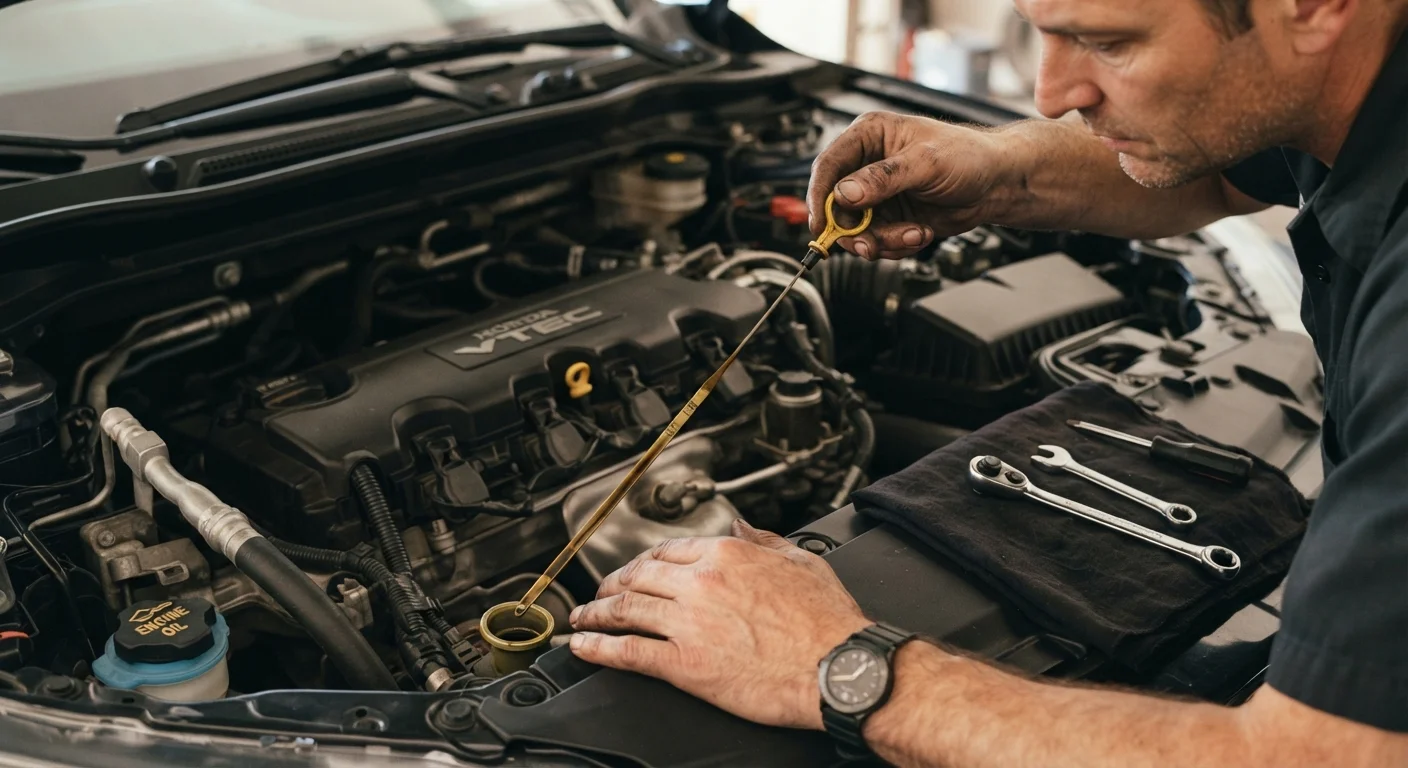
Using an oil that's heavier than your engine requires increases internal friction, which costs energy - and fuel. As engines age, there can be pressure to switch to a thicker oil, but this should only be done when specifically recommended for your vehicle's condition. For a detailed breakdown, see oil change intervals and oil type guidance.
Keep tires inflated to the recommended pressure
Underinflated tires increase rolling resistance - the force the engine must overcome just to keep the vehicle moving. Even a few PSI below the recommended level can reduce fuel economy by a meaningful amount across a full tank. The relationship between tire pressure and fuel economy is well established and easy to act on.
Address a failing oxygen sensor promptly
The oxygen sensor monitors exhaust gases and helps the engine control unit balance the air-fuel ratio. A degraded sensor causes the engine to run too rich (excess fuel) or too lean, both of which reduce efficiency and can trigger a check engine light. This is a repair that should be handled by a qualified mechanic.
Keep up with cooling system maintenance
An engine that runs too hot or too cool doesn't burn fuel efficiently. The thermostat, coolant condition, and radiator all play a role in keeping the engine at its optimal operating temperature. Neglecting coolant flushes over time can also lead to corrosion that undermines system performance.
Quick Actions You Can Take This Week
You don't need to overhaul your entire maintenance schedule to start recovering lost MPG. A handful of targeted actions can make a measurable difference quickly.
Driving behavior also plays a significant role - especially in older vehicles where the powertrain is already working harder. Habits behind the wheel that quietly drain your fuel tank covers the behavioral side in detail. And if you're managing a higher-mileage vehicle, keeping a high-mileage car reliable offers guidance on prioritizing services as the odometer climbs.
This article is for general informational purposes. Always consult your vehicle's owner's manual and a qualified mechanic before performing or scheduling maintenance, particularly for older or high-mileage vehicles.